Internal Linking Strategy SEO 2026: 10 Powerful Ways to Boost Rankings Fast

In todayโ€™s competitive search landscape, mastering an effective internal linking strategy SEO approach is one of the most underrated yet powerful ways to improve rankings. While many website owners focus only on keywords and content, internal linking quietly strengthens your siteโ€™s structure, authority, and user experience.

Understanding how Google Search works helps you build a more effective internal linking strategy

Simply put, internal links connect one page of your website to another. But when done strategically, they help search engines understand your content hierarchy and distribute ranking power across your site. This makes internal linking a critical part of modern on-page SEO.

internal linking strategy seo

Table of Contents

๐Ÿ“Œ Why Internal Linking Matters in 2026

Search engines like Google rely on links to discover, crawl, and rank pages. A well-planned internal linking strategy SEO ensures that your most important pages receive the attention they deserve.

Hereโ€™s what strong internal linking can do:

  • Improve crawlability and indexation
  • Distribute link equity (SEO value) across pages
  • Increase time on site and user engagement
  • Help rank deeper pages faster

For growing websites targeting USA traffic, this becomes even more important. Without proper linking, your content may remain hiddenโ€”even if itโ€™s high quality.

๐ŸŽฏ Internal Linking vs External Linking

Itโ€™s important to distinguish between internal and external links:

  • Internal links โ†’ connect pages within your own website
  • External links โ†’ point to other websites

While both are important, internal links give you full control over how authority flows through your site.

๐Ÿง  EEAT Perspective

From an EEAT standpoint (Experience, Expertise, Authority, Trust), internal linking helps demonstrate topical depth. When your content is connected logically, it signals to Google that your website is structured, reliable, and authoritative.

Thatโ€™s why every successful SEO strategy today includes a well-planned internal linking strategy SEO framework.

To fully understand an effective internal linking strategy SEO, you need to know how search engines actually use links to evaluate your website. Internal links are not just navigation toolsโ€”they act as signals that guide both users and search engine crawlers through your content.

When Googleโ€™s bots visit your website, they follow internal links to discover new pages. If a page has no internal links pointing to it, it becomes an orphan page, making it difficult to index and rank. This is why a structured internal linking system is essential for strong on-page SEO performance, as outlined in a comprehensive on-page SEO checklist.

๐Ÿ” How Link Equity Flows

Every page on your website has a certain level of authority. Internal links help distribute this authority, often referred to as link equity, across your site.

Hereโ€™s how it works:

  • Pages with higher authority pass value to linked pages
  • Strategic linking boosts lower-ranking pages
  • Important pages gain more visibility in search results

A smart internal linking strategy SEO ensures that your most valuable pages receive the strongest signals.

๐Ÿ“Š Anchor Text & Context

Anchor textโ€”the clickable text of a linkโ€”plays a crucial role in helping search engines understand what the linked page is about, making proper anchor text optimization essential.

Best practices:

  • Use descriptive and relevant anchor text
  • Avoid generic phrases like โ€œclick hereโ€
  • Keep it natural and user-friendly

Proper anchor usage strengthens your content relevance and improves rankings.

๐Ÿง  User Experience Connection

Internal linking is not just for search enginesโ€”it directly impacts user behavior.

  • Helps users find related content
  • Increases time spent on your website
  • Reduces bounce rates

When users navigate smoothly, it sends positive engagement signals to Google.

๐ŸŽฏ Key Insight

A well-executed internal linking strategy SEO creates a clear path for both users and search engines, ensuring your content is discovered, understood, and ranked effectively.

To build a strong internal linking strategy SEO, itโ€™s important to understand that not all internal links are the same. Different types of links serve different purposes, and using them correctly can significantly improve your site structure and rankings.

Letโ€™s break down the most effective types of internal links you should use.

Following Googleโ€™s SEO starter guidelines ensures your internal links align with best practices.

๐Ÿ”น 1. Navigational Links

These are found in menus, headers, and footers. They help users explore your website easily and allow search engines to understand your main pages.

Examples:

  • Homepage links
  • Category pages
  • Important service or tool pages

These links form the backbone of your website structure and support on-page SEO.

๐Ÿ”น 2. Contextual Links (Most Powerful)

Contextual links are placed within your content and are the most important part of any internal linking strategy SEO.

They:

  • Provide relevance based on content
  • Pass strong link equity
  • Improve user engagement

For example, linking from a blog about keywords to another article about optimization creates a logical content flow.

๐Ÿ”น 3. Sidebar Links

Sidebar links highlight important or popular content across multiple pages.

They are useful for:

  • Promoting key articles
  • Improving page visibility
  • Enhancing internal navigation

๐Ÿ”น 4. Footer Links

Footer links are placed at the bottom of your website and typically include important pages like:

  • Contact
  • Privacy Policy
  • Main categories

While they pass less SEO value than contextual links, they still contribute to overall structure.

๐Ÿ”น 5. Breadcrumb Links

Breadcrumbs show users their location within your website hierarchy.

Benefits:

  • Improve navigation
  • Help search engines understand structure
  • Enhance user experience

๐ŸŽฏ Strategic Insight

A complete internal linking strategy SEO uses a mix of these link types to create a well-connected, easy-to-navigate website that both users and search engines can trust.

Now that you understand the types of links, itโ€™s time to apply a results-driven internal linking strategy SEO that can directly improve your rankings. These proven techniques are designed to strengthen your site structure and maximize SEO performance.

๐Ÿš€ 1. Link to High-Priority Pages First

Always direct internal links toward your most important pages, such as pillar content or conversion-focused pages.

๐Ÿš€ 2. Use Keyword-Rich Anchor Text Naturally

Incorporate relevant keywords without over-optimization to support better context and rankings.

๐Ÿš€ 3. Create Topic Clusters (Silo Structure)

Group related content together. This strengthens topical authority and improves on-page SEO signals.

๐Ÿš€ 4. Link from High Authority Pages

Pages that already rank well should pass value to newer or weaker pages.

๐Ÿš€ 5. Keep Links Contextually Relevant

Only link where it makes sense. Relevance is more important than quantity.

๐Ÿš€ 6. Avoid Over-Linking

Too many links can dilute value and confuse users. Keep it clean and focused.

๐Ÿš€ 7. Update Old Content with New Links

Go back to existing posts and add links to newer articles to boost visibility.

๐Ÿš€ 8. Fix Orphan Pages

Ensure every page has at least one internal link pointing to it.

๐Ÿš€ 9. Use Descriptive Anchor Text

Avoid generic phrasesโ€”make your links meaningful and informative.

๐Ÿš€ 10. Maintain Logical Link Flow

Guide users naturally from one topic to another, improving navigation and engagement.

๐ŸŽฏ Pro Insight

A strong internal linking strategy SEO is not about adding more linksโ€”itโ€™s about adding the right links in the right places. When done correctly, it creates a seamless experience that benefits both users and search engines.

Even with a solid plan, mistakes in your internal linking strategy SEO can limit your websiteโ€™s performance. Many site owners unknowingly weaken their rankings by using poor linking practices that confuse search engines and frustrate users.

Avoiding these common errors is essential to maintain a strong and effective on-page SEO structure.

โŒ 1. Using Too Many Internal Links

Adding excessive links on a single page dilutes link equity and overwhelms users. Instead of helping, it reduces clarity and impact.

โŒ 2. Ignoring Anchor Text Optimization

Generic anchors like โ€œclick hereโ€ provide no context. This weakens your SEO signals and makes it harder for search engines to understand your content relationships.

โŒ 3. Linking to Irrelevant Pages

Internal links should always match the topic. Irrelevant linking disrupts user flow and reduces trust in your content.

โŒ 4. Creating Orphan Pages

Pages without internal links are difficult for search engines to find. This limits their chances of ranking, no matter how good the content is.

โŒ 5. Over-Optimizing Anchor Text

Maintaining the right keyword density in SEO is essential to keep your anchor text natural and avoid over-optimization.

โŒ 6. Not Updating Old Content

Many websites fail to revisit older posts. By not adding links to newer content, you miss opportunities to improve visibility and authority.

โŒ 7. Broken Internal Links

Links that lead to 404 pages harm both user experience and SEO performance. Regular audits are necessary to fix these issues.

โš ๏ธ Critical Insight

A successful internal linking strategy SEO is built on clarity, relevance, and consistency. Small mistakes can quietly weaken your entire structure.

โœ… Quick Fix Checklist

  • Keep links relevant and intentional
  • Use clear and descriptive anchor text
  • Ensure every page is properly connected
  • Regularly audit and update your links

Avoiding these mistakes ensures your internal linking system supports growth instead of holding it back.

To stay competitive in 2026, your internal linking strategy SEO must go beyond basic linking. Advanced strategies focus on data, structure, and user behavior to maximize results in highly competitive markets like the USA.

๐Ÿ”ฅ 1. Build Topic Clusters with Depth

Instead of random linking, organize your content into clusters. Each cluster should revolve around a central pillar page supported by related articles.

Benefits:

  • Strengthens topical authority
  • Improves keyword relevance
  • Enhances overall on-page SEO

๐Ÿ”ฅ 2. Use Hierarchical Linking Structure

Structure your links in a clear hierarchy:

  • Pillar page โ†’ links to cluster pages
  • Cluster pages โ†’ link back to pillar
  • Cluster pages โ†’ interlink with each other

This creates a strong SEO network that search engines can easily understand.

๐Ÿ”ฅ 3. Prioritize Crawl Depth Optimization

Important pages should not be buried deep within your website. Ideally, users and search engines should reach key pages within 2โ€“3 clicks.

๐Ÿ”ฅ 4. Leverage Data for Link Optimization

Use analytics tools to identify:

  • High-performing pages
  • Pages with low visibility
  • Opportunities to pass link equity

This data-driven approach improves your linking efficiency.

๐Ÿ”ฅ 5. Contextual Linking Based on User Intent

Match your internal links with user intent:

  • Informational โ†’ link to guides
  • Commercial โ†’ link to comparison pages
  • Transactional โ†’ link to tools or services

๐Ÿ”ฅ 6. Use Internal Links to Boost New Content

Whenever you publish a new article, immediately link to it from existing high-authority pages. This accelerates indexing and ranking.

๐Ÿ”ฅ 7. Maintain a Clean and Logical Structure

Avoid clutter. Every link should have a purpose and guide users naturally through your content.

๐ŸŽฏ Strategic Insight

An advanced internal linking strategy SEO is not staticโ€”it evolves with your content, data, and user behavior. The more structured and intentional your linking system is, the stronger your rankings will become.

By now, youโ€™ve learned how a structured internal linking strategy SEO can significantly improve your rankings, user experience, and website authority. While many SEO techniques require external effort, internal linking is fully within your controlโ€”making it one of the most powerful tools for long-term growth.

โœ… Step-by-Step Action Plan

To implement everything effectively, follow this proven framework:

  1. Audit Your Current Internal Links
    Identify weak, broken, or missing links across your website.
  2. Strengthen Key Pages
    Link more frequently to your most important pages to boost visibility.
  3. Use Clear and Relevant Anchor Text
    Ensure each link provides context and value to users.
  4. Build a Logical Content Structure
    Organize your pages into clusters and maintain a clear hierarchy.
  5. Update Old Content Regularly
    Add links to newer posts to keep your content interconnected.
  6. Fix Orphan and Broken Pages
    Ensure every page is accessible and properly linked.
  7. Monitor Performance and Adjust
    Track engagement and refine your linking strategy over time.
Meta Tags Optimization Guide 2026: 12 Powerful Tips to Boost Rankings Fast

Introduction to Meta Tags Optimization

In todayโ€™s highly competitive digital landscape, understanding a meta tags optimization guide is essential for anyone who wants to rank higher on Googleโ€”especially in the USA market where competition is intense and constantly evolving. While many beginners focus only on content, experienced SEO professionals know that meta tags are one of the most powerful elements behind strong search performance.

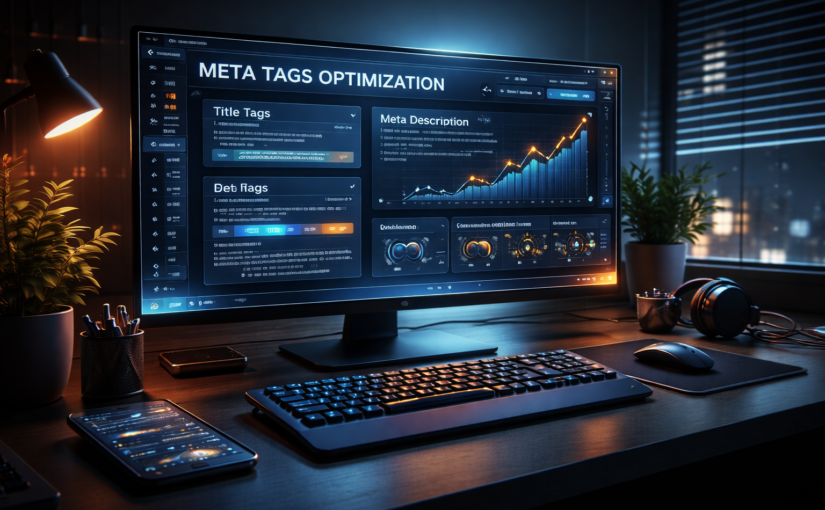
Meta tags are small snippets of HTML code that provide search engines with critical information about your webpage. Although they are not visible on the page itself, they directly influence how your content appears in search engine results. This makes them a core component of meta tags SEO, impacting both rankings and click-through rates.

From an EEAT (Experience, Expertise, Authority, Trust) perspective, properly optimized meta tags signal to search engines that your content is structured, relevant, and trustworthy. When users see a clear and compelling title along with a well-written description, they are more likely to clickโ€”sending positive engagement signals back to Google.

meta tags optimization guide

Table of Contents

๐Ÿ“Œ Why Meta Tags Still Matter in 2026

Despite constant algorithm updates, meta tags remain a foundational part of SEO. Hereโ€™s why:

  • They help search engines understand your page topic clearly
  • They improve visibility in search results
  • They increase organic click-through rates (CTR)
  • They support your overall on-page SEO strategy on-page SEO checklist

A well-crafted title tag combined with effective meta description optimization can be the difference between a page that ranks and one that gets ignored.

๐ŸŽฏ The Real Impact on Rankings

While meta tags alone wonโ€™t guarantee top rankings, they significantly influence user behavior. Google tracks how users interact with search results, which is a core part of how Google Search works.
. If your listing attracts more clicks and keeps users engaged, your rankings can improve over time.

Thatโ€™s why following a structured meta tags optimization guide is not just about technical SEOโ€”itโ€™s about creating a better experience for both search engines and real users.

Core Types of Meta Tags You Must Optimize

To fully implement a meta tags optimization guide, you must understand the core types of meta tags that directly influence your search performance. Each tag serves a specific purpose, and when optimized correctly, they work together to strengthen your overall meta tags SEO strategy.

Letโ€™s break down the most important ones every website owner should focus on.

๐Ÿ”น 1. Title Tag (Most Important Ranking Signal)

The title tag is the first thing users see in search results. It plays a critical role in both rankings and click-through rates, making it the foundation of effective title tags SEO.

Best practices:

  • Keep it within 50โ€“60 characters
  • Place your main keyword at the beginning
  • Use power words and numbers to attract clicks
  • Ensure it clearly reflects page intent

A strong title not only improves visibility but also builds trust with users before they even visit your page.

๐Ÿ”น 2. Meta Description (CTR Booster)

While not a direct ranking factor, meta descriptions heavily influence user behavior. Proper meta description optimization can significantly increase your organic traffic.

Optimization tips:

  • Keep it between 150โ€“160 characters
  • Write persuasive, benefit-driven text
  • Include a soft call-to-action
  • Match the search intent of your audience

Think of it as your organic ad copyโ€”your chance to convince users to click.

๐Ÿ”น 3. Robots Meta Tag (Crawling Control)

This tag tells search engines how to interact with your page.

Common values include:

  • index / noindex
  • follow / nofollow

Using this correctly ensures your important pages are indexed while unnecessary pages are excluded.

๐Ÿ”น 4. Open Graph & Social Meta Tags

These tags control how your content appears when shared on platforms like Facebook or LinkedIn. While not directly part of meta tags SEO, they improve visibility and engagement across channels.

๐Ÿ”น 5. Viewport Meta Tag (Mobile Optimization)

With mobile-first indexing, this tag ensures your site is responsive and user-friendly across all devicesโ€”an essential part of modern on-page SEO.

Understanding these elements is the foundation of any effective meta tags optimization guide, setting the stage for advanced optimization strategies.

12 Powerful Meta Tags Optimization Tips to Boost Rankings

Now that you understand the core elements, itโ€™s time to apply a proven meta tags optimization guide with actionable strategies. These tips are designed specifically for competitive markets like the USA, where small improvements can lead to significant ranking gains.

๐Ÿš€ 1. Place Your Keyword at the Beginning

Start your title with your main keyword to improve relevance and visibility in meta tags SEO.

๐Ÿš€ 2. Use Numbers & Power Words

Titles like โ€œ12 Powerful Tipsโ€ attract attention and increase click-through rates.

๐Ÿš€ 3. Optimize for Click-Through Rate (CTR)

Think beyond rankings. A compelling title and description can outperform higher-ranking competitors.

๐Ÿš€ 4. Keep Titles Within Optimal Length

Avoid truncation by staying under 60 charactersโ€”this improves readability and professionalism.

๐Ÿš€ 5. Write Benefit-Driven Descriptions

Strong meta description optimization focuses on what the user gains, not just what the page contains.

๐Ÿš€ 6. Avoid Keyword Stuffing

Overloading keywords makes your listing look spammy and reduces trust, which is why maintaining proper keyword density in SEO is essential.

๐Ÿš€ 7. Match Search Intent Precisely

Ensure your meta tags align with what users are actually searching forโ€”informational, commercial, or transactional.

๐Ÿš€ 8. Use Action-Oriented Language

Words like Discover, Learn, and Boost encourage users to take action.

๐Ÿš€ 9. Make Every Page Unique

Duplicate tags weaken your SEO signals and confuse search engines.

๐Ÿš€ 10. Optimize for Mobile Users

Shorter, clearer titles perform better on mobile devices, a key factor in modern on-page SEO.

๐Ÿš€ 11. Add Branding Strategically

Including your brand name builds authority and trust, especially for returning users.

๐Ÿš€ 12. Test and Update Regularly

SEO is not static. Continuously refine your tags based on performance data.

๐ŸŽฏ Pro Insight

Following a structured meta tags optimization guide is not just about technical implementationโ€”itโ€™s about influencing user behavior. When your listing stands out in search results, it naturally earns more clicks, better engagement, and stronger rankings over time.

Critical Meta Tags Mistakes That Damage Your SEO Performance

Even when you follow a structured meta tags optimization guide, certain mistakes can silently weaken your rankings. In highly competitive search environments like the USA, these errors donโ€™t just slow growthโ€”they can completely block your visibility.

To build a strong meta tags SEO foundation, you must identify and eliminate these common issues.

โŒ 1. Missing or Poorly Written Meta Tags

If your pages lack properly defined meta tags, search engines will generate them automatically. This often leads to irrelevant or unattractive snippets, reducing your click-through rate and weakening your positioning.

A weak start here can undermine all your SEO efforts.

โŒ 2. Duplicate Meta Tags Across Pages

Using identical titles and descriptions on multiple pages sends mixed signals to search engines. Each page should target a unique topic and intent, supported by distinct meta tags.

Duplicate tags dilute your authority and reduce your chances of ranking.

โŒ 3. Overloading Keywords (Over-Optimization)

While keywords are essential, forcing them unnaturally into your tags harms readability and trust. Modern SEO favors clarity and user intent over repetition.

Balanced usage is key to maintaining effective meta description optimization and overall performance.

โŒ 4. Misalignment with Search Intent

One of the most overlooked issues is writing meta tags that donโ€™t match what users are actually searching for. If your title promises one thing but delivers another, users will leave quicklyโ€”hurting your rankings.

โŒ 5. Ignoring Mobile Display Limitations

Titles and descriptions that are too long get cut off on mobile devices. Since most users browse on mobile, this directly affects visibility and engagement within your on-page SEO strategy.

โŒ 6. Writing Generic or Low-Value Descriptions

A vague description like โ€œLearn more about SEOโ€ does not motivate users to click. Strong meta tags should clearly communicate value and outcomes.

โŒ 7. Failing to Update Meta Tags Over Time

SEO is constantly evolving. What worked last year may not perform today. Regular audits are essential to keep your optimization relevant.

โœ… Quick Optimization Checklist

  • Write unique, intent-focused tags for every page
  • Keep messaging clear, specific, and user-focused
  • Avoid keyword stuffing and duplication
  • Update tags based on performance data

A complete meta tags optimization guide is not just about adding tagsโ€”itโ€™s about avoiding these hidden mistakes that limit your growth.

Advanced Meta Tags Optimization Strategy for 2026

Once youโ€™ve mastered the basics, the next step in any effective meta tags optimization guide is applying advanced strategies that give you a competitive edgeโ€”especially in high-competition regions like the USA.

In 2026, SEO is no longer just about adding keywords. Itโ€™s about data-driven decisions, user behavior signals, and continuous optimization.

๐Ÿ”ฅ 1. Use Data to Optimize CTR

Modern meta tags SEO relies heavily on performance data. Instead of guessing, analyze how your titles and descriptions perform.

Track key metrics:

  • Click-through rate (CTR)
  • Impressions
  • Average position

If a page ranks but gets low clicks, your meta tags likely need improvement.

๐Ÿ”ฅ 2. A/B Testing for Meta Tags

Testing different variations of titles and descriptions can significantly improve performance.

Try:

  • Different power words
  • Emotional triggers
  • Question-based titles

Even small changes in wording can lead to higher engagement.

๐Ÿ”ฅ 3. Competitor Meta Tag Analysis

Top-ranking competitors provide valuable insights. Study their:

  • Title structures
  • Keyword placement
  • Messaging style

Then improve upon themโ€”not copy them.

๐Ÿ”ฅ 4. Optimize for Featured Snippets

For deeper implementation, follow the official Google structured data guidelines to enhance your search appearance.

To increase visibility, structure your content and tags to target featured snippets.

Tips:

  • Answer questions clearly
  • Use concise summaries
  • Align titles with search queries

๐Ÿ”ฅ 5. Leverage AI Tools for Optimization

AI-powered tools can help generate high-performing variations and predict CTR trends. When used correctly, they enhance your meta description optimization process without compromising quality.

๐Ÿ”ฅ 6. Align Meta Tags with Content Depth

Your meta tags should reflect the actual value of your content. Misalignment leads to higher bounce rates and weaker rankings.

๐Ÿ”ฅ 7. Build Trust Through EEAT Signals

In advanced SEO, trust matters more than ever. Your meta tags should reflect:

  • Expertise
  • Authority
  • Credibility

For example, including terms like โ€œGuide,โ€ โ€œProven,โ€ or โ€œ2026โ€ can improve perceived value.

๐ŸŽฏ Strategic Insight

A strong meta tags optimization guide in 2026 is not staticโ€”it evolves based on data, competition, and user behavior. The more you refine your approach, the stronger your rankings become.

Conclusion, Action Plan + SEO Framework

By now, youโ€™ve understood how a structured meta tags optimization guide can directly influence your rankings, visibility, and click-through rates. While meta tags may seem like a small part of SEO, they play a powerful role in shaping how both users and search engines perceive your content.

In competitive markets like the USA, even minor improvements in meta tags SEO can lead to measurable growth in traffic and engagement.

โœ… Step-by-Step Action Plan

To implement everything effectively, follow this simple process:

  1. Audit Existing Meta Tags
    Review your current titles and descriptions for relevance and performance.
  2. Rewrite Titles with Intent & Clarity
    Use numbers, power words, and proper title tags SEO structure.
  3. Improve Descriptions for CTR
    Apply strong meta description optimization techniques with clear benefits.
  4. Ensure Uniqueness Across Pages
    Avoid duplication and align each page with a specific keyword intent.
  5. Optimize for Mobile & Readability
    Keep titles concise and impactful across all devices.
  6. Monitor & Update Regularly
    Track performance and refine based on real data.

To explore more tools and practical resources, visit our SEO tools and optimization resources.

On-Page SEO Checklist 2026: 15 Powerful Tips to Rank #1 on Google

๐Ÿš€ Introduction: Why Most Websites Fail to Rank (And How You Can Win)

If your website is not ranking on Google, the problem is rarely โ€œbad luck.โ€
In most cases, it comes down to one thing โ€” poor on-page optimization.

The truth is simple: without a proper On-Page SEO Checklist 2026, even great content stays invisible.

Search engines like Google have become smarter. In 2026, they donโ€™t just scan keywords โ€” they analyze:

  • Content quality
  • User experience
  • Structure
  • Relevance

Thatโ€™s why blindly adding keywords no longer works.

๐Ÿ‘‰ Instead, you need a strategic, structured, and updated approach.

This beginner-friendly guide will walk you through:

  • What on-page SEO really means
  • Why it matters more than ever in 2026
  • Actionable steps you can implement immediately

By the end, youโ€™ll have a complete On-Page SEO Checklist 2026 to start ranking faster.

On-Page SEO Checklist 2026

Table of Contents

๐Ÿ“˜ What is On-Page SEO? (Simple Explanation)

On-page SEO refers to optimizing everything inside your website to improve rankings on Google.

This includes:

  • Content optimization
  • Keyword placement
  • Meta tags
  • Internal linking
  • Page structure

Unlike off-page SEO (like backlinks), this is 100% under your control.

๐Ÿ‘‰ Think of it like this:
Your website is a house, and on-page SEO is how well you organize and decorate it for visitors and Google.

๐Ÿ” Core Elements of On-Page SEO

Here are the most important components:

  • Title Tags โ†’ First impression on Google
  • Meta Descriptions โ†’ Improve click-through rate
  • Headings (H1โ€“H3) โ†’ Structure your content
  • Keyword Placement SEO โ†’ Helps Google understand context
  • Content Quality โ†’ The most important ranking factor

โšก Why On-Page SEO Matters More in 2026

Googleโ€™s algorithm updates now focus heavily on principles outlined in the Google Search Central guidelines to ensure helpful and user-focused content.

  • User intent
  • Content depth
  • Helpful experience

This means:

Low-quality or poorly optimized pages simply wonโ€™t rank.

Using a strong On-Page SEO Checklist 2026 helps you:

  • โœ… Rank higher on Google
  • โœ… Increase organic traffic
  • โœ… Improve user engagement
  • โœ… Reduce bounce rate

๐Ÿ“Š What Changed in 2026?

Here are the biggest shifts:

  1. Search Intent > Keywords
  2. Helpful Content System dominates rankings
  3. User experience signals are critical
  4. Content structure matters more than ever

๐Ÿ‘‰ So if you’re still using outdated on-page SEO tips, you’re already behind.

๐Ÿง  Tip #1: Start With Search Intent (The #1 Ranking Factor)

Before writing anything, ask:

What does the user actually want?

There are 3 main types of intent:

  • Informational
  • Commercial
  • Transactional

If your content doesnโ€™t match intent, it wonโ€™t rank โ€” no matter how optimized it is.

โœ”๏ธ How to Optimize for Search Intent

  • Analyze top-ranking pages
  • Match their content style
  • Provide better, clearer answers
  • Avoid unnecessary fluff

๐Ÿ‘‰ This is the foundation of every successful SEO checklist for beginners.

โœ๏ธ Tip #2: Use the Focus Keyword Strategically

Your focus keyword โ€” On-Page SEO Checklist 2026 โ€” must be used smartly, not excessively.

โœ”๏ธ Where to Place It

  • Title (at the beginning)
  • First 100 words
  • At least one H2 heading
  • Naturally throughout the content

โš ๏ธ Avoid This Mistake

โŒ Keyword stuffing
โŒ Forced repetition

Instead:

  • Keep it natural
  • Focus on readability

๐Ÿ‘‰ Proper keyword placement SEO is essential for better rankings, and using a meta tags generator tool can further optimize your page.

๐Ÿงฉ Tip #3: Optimize Your Title Tag for Clicks

Your title is what users see first on Google.

A powerful title should:

  • Include your keyword
  • Use numbers (like โ€œ15 Tipsโ€)
  • Add emotional triggers (Powerful, Proven, Ultimate)

โœ”๏ธ Example

Good Title:
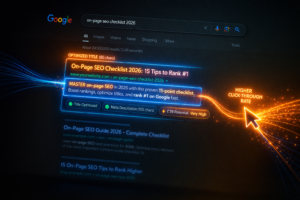
On-Page SEO Checklist 2026: 15 Powerful Tips to Rank #1

๐Ÿ‘‰ This is one of the most effective on-page SEO tips to improve CTR instantly.

๐Ÿ“ Tip #4: Write a Compelling Meta Description

Meta descriptions donโ€™t directly rank โ€” but they influence clicks.

โœ”๏ธ Best Practices

  • Keep under 160 characters
  • Include the focus keyword
  • Add a benefit-driven hook

โœจ Example

โ€œDiscover the ultimate On-Page SEO Checklist 2026 to boost rankings, optimize content, and drive more organic traffic fast.โ€

๐Ÿ‘‰ This small tweak can significantly improve your improve Google ranking efforts.

๐Ÿ“‘ Tip #5: Use Proper Heading Structure (H1โ€“H3)

Headings are not just for design โ€” they help Google understand your content.

โœ”๏ธ Correct Structure

  • H1 โ†’ Main title
  • H2 โ†’ Main sections
  • H3 โ†’ Subpoints

๐Ÿ’ก Pro Tip

Include variations of your keyword naturally in headings.

This improves:

  • Readability
  • SEO clarity
  • User experience

๐Ÿ‘‰ Strong structure is a core part of on-page optimization techniques.

๐Ÿ”— Tip #6: Optimize Your URL Structure (Keep It Clean & SEO-Friendly)

A clean URL structure combined with a properly configured XML sitemap generator tool helps search engines crawl and index your pages more efficiently.

Your URL is a small detail โ€” but it plays a big role in rankings and user trust.

A clean URL helps both:

  • Users understand your page
  • Google crawl your content better

โœ”๏ธ Best Practices for SEO URLs

  • Keep it short and simple
  • Include your focus keyword: On-Page SEO Checklist 2026
  • Use hyphens (-) instead of underscores
  • Avoid unnecessary numbers or symbols

โœจ Example

โœ… Good:
/on-page-seo-checklist-2026

โŒ Bad:
/seo?id=12345&page=checklist2026

๐Ÿ‘‰ Clean URLs are a fundamental part of on-page optimization techniques that many beginners ignore.

๐Ÿ”„ Tip #7: Build Smart Internal Linking (Boost Authority Instantly)

Internal linking is one of the most underrated SEO strategies.

It helps:

  • Distribute page authority
  • Improve crawlability
  • Keep users engaged longer

โœ”๏ธ How to Do It Properly

  • Link to relevant pages (like your Keyword Density in SEO article)
  • Use descriptive anchor text
  • Avoid over-linking

๐Ÿ’ก Pro Tip

Always link:

  • From high-authority pages โ†’ new pages
  • Between related cluster posts

๐Ÿ‘‰ This strengthens your SEO silo structure and improves rankings.

๐Ÿ–ผ๏ธ Tip #8: Optimize Images for SEO (Faster + Smarter Pages)

Images are essential for engagement โ€” but if not optimized, they can slow your site.

โœ”๏ธ Image SEO Checklist

  • Use descriptive file names (on-page-seo-checklist.jpg)
  • Add alt text (important for accessibility + SEO)
  • Compress images for faster loading
  • Use modern formats (WebP)

โœจ Example Alt Text

โ€œOn-Page SEO Checklist 2026 infographic showing ranking tipsโ€

๐Ÿ‘‰ Proper image optimization is a key part of content optimization SEO.

โšก Tip #9: Improve Page Speed (Critical Ranking Factor)

Improving speed is easier when you use the right technical SEO tools to analyze and optimize your website structure.

In 2026, speed = rankings.

If your site is slow:

  • Users leave
  • Bounce rate increases
  • Rankings drop

โœ”๏ธ Ways to Improve Speed

To further improve performance, you can analyze your website speed using Google PageSpeed Insights for detailed recommendations.

  • Use fast hosting
  • Enable caching
  • Optimize images
  • Minimize CSS & JavaScript

๐Ÿ“Š Ideal Speed Targets

  • Load time: under 3 seconds
  • Mobile performance: high priority

๐Ÿ‘‰ Page speed directly impacts your ability to improve Google ranking.

๐Ÿ“ฑ Tip #10: Make Your Site Mobile-Friendly

Over 70% of users browse on mobile โ€” and Google uses mobile-first indexing.

โœ”๏ธ Mobile Optimization Tips

  • Use responsive design
  • Ensure text is readable
  • Avoid intrusive pop-ups
  • Optimize buttons for touch

๐Ÿ’ก Why It Matters

A poor mobile experience can:

  • Kill your rankings
  • Reduce conversions
  • Hurt user trust

๐Ÿ‘‰ Mobile optimization is now a core part of SEO best practices 2026.

๐Ÿง  Quick Recap

So far in this On-Page SEO Checklist 2026, youโ€™ve learned:

  • โœ”๏ธ How to create SEO-friendly URLs
  • โœ”๏ธ The power of internal linking
  • โœ”๏ธ Image optimization techniques
  • โœ”๏ธ Why speed matters
  • โœ”๏ธ Mobile-first optimization

These steps alone can give you a strong ranking advantage over competitors still using outdated strategies.

โœ๏ธ Tip #11: Create High-Quality, Helpful Content (Googleโ€™s #1 Priority)

No matter how optimized your page is, if your content is weak โ€” you wonโ€™t rank.

In 2026, Google prioritizes:

  • Helpful content
  • Real value
  • User satisfaction

โœ”๏ธ What Makes Content High-Quality?

  • Solves a real problem
  • Easy to read and understand
  • Well-structured with headings
  • Includes examples and clarity

๐Ÿ’ก Pro Tip

Write for humans first, then optimize for SEO.

๐Ÿ‘‰ This is the backbone of any successful On-Page SEO Checklist 2026 strategy.

๐Ÿ“ Tip #12: Master Keyword Placement (Without Stuffing)

Keyword placement is still important โ€” but overdoing it can hurt rankings.

โœ”๏ธ Smart Keyword Placement Areas

  • First 100 words
  • Headings (H2, H3)
  • Image alt text
  • Naturally in paragraphs

โš ๏ธ Avoid These Mistakes

โŒ Repeating keywords unnaturally
โŒ Forcing keywords into every sentence

โœจ Best Practice

Use variations and synonyms to maintain flow.

๐Ÿ‘‰ Proper keyword placement SEO improves both rankings and readability.

๐Ÿท๏ธ Tip #13: Optimize Meta Tags (Title + Description + More)

Meta tags help search engines understand your content and improve click-through rates.

โœ”๏ธ Key Meta Tags to Optimize

  • Title tag
  • Meta description
  • Header tags
  • Image alt attributes

๐Ÿ’ก Advanced Tip

Make your title and description:

  • Emotion-driven
  • Benefit-focused
  • Clear and concise

๐Ÿ‘‰ This is one of the most overlooked on-page SEO tips that can dramatically improve visibility.

๐Ÿง  Quick Recap

Inside this On-Page SEO Checklist 2026, youโ€™ve now learned:

  • โœ”๏ธ How to create helpful, high-quality content
  • โœ”๏ธ Smart keyword placement strategies
  • โœ”๏ธ Meta tag optimization

These are core ranking factors that separate top-ranking pages from average ones.

๐Ÿ‘€ Tip #14: Improve User Engagement Signals (Hidden Ranking Factor)

Google doesnโ€™t just look at your content โ€” it tracks how users interact with it.

These are called engagement signals, and they include:

  • Time on page
  • Click-through rate (CTR)
  • Bounce rate

โœ”๏ธ How to Improve Engagement

  • Write compelling introductions
  • Use short paragraphs
  • Add bullet points and visuals
  • Keep content easy to scan

๐Ÿ’ก Pro Tip

Hook your reader within the first 5 seconds.

๐Ÿ‘‰ Strong engagement signals tell Google your content is valuable, boosting your On-Page SEO Checklist 2026 performance.

๐Ÿ“‰ Tip #15: Reduce Bounce Rate (Keep Visitors Longer)

If users leave your page quickly, Google assumes your content isnโ€™t helpful.

โœ”๏ธ Ways to Reduce Bounce Rate

  • Match search intent perfectly
  • Improve page speed
  • Use internal linking
  • Add clear structure

โœจ Example Strategy

At the end of sections, guide users like:

  • โ€œRead next: Keyword Density in SEOโ€
  • โ€œExplore more SEO tips hereโ€

๐Ÿ‘‰ Lower bounce rate = better chances to improve Google ranking.

๐Ÿ“– Bonus Section: Improve Readability (Make Content Effortless to Read)

Even great content fails if itโ€™s hard to read.

โœ”๏ธ Readability Best Practices

  • Use short sentences
  • Keep paragraphs under 3 lines
  • Use bullet points and numbering
  • Highlight important words using italics

๐Ÿ’ก Formatting Tips

  • Add spacing between sections
  • Use clear headings (H2, H3)
  • Avoid large blocks of text

๐Ÿ‘‰ These are essential SEO content writing tips for modern rankings.

๐ŸŽฏ Bonus Section: Content Formatting Secrets (Pro-Level Optimization)

Well-formatted content performs better โ€” both for users and search engines.

โœ”๏ธ Advanced Formatting Techniques

  • Use numbered lists for steps
  • Add bold or italic emphasis
  • Break complex ideas into sections
  • Use consistent heading hierarchy

๐Ÿ“Š Why It Matters

Better formatting leads to:

  • Higher engagement
  • Longer session duration
  • Better rankings

๐Ÿ‘‰ This aligns with modern SEO best practices 2026.

๐Ÿง  Quick Recap

In this section of the On-Page SEO Checklist 2026, you learned:

  • โœ”๏ธ How to improve user engagement signals
  • โœ”๏ธ Ways to reduce bounce rate
  • โœ”๏ธ Readability optimization
  • โœ”๏ธ Advanced content formatting

These factors are often ignored โ€” but they can significantly boost your rankings.

๐Ÿง  Advanced Strategy #1: Optimize for EEAT (Experience, Expertise, Authority, Trust)

In 2026, Google heavily evaluates EEAT before ranking content.

That means your page must show:

  • Real experience
  • Expert knowledge
  • Credibility
  • Trustworthiness

โœ”๏ธ How to Improve EEAT

  • Add author information
  • Include real examples or insights
  • Link to credible external sources
  • Keep your content accurate and updated

๐Ÿ’ก Pro Tip

Even beginner content can rank if it is:

clear, helpful, and trustworthy

๐Ÿ‘‰ Strengthening EEAT enhances your overall On-Page SEO Checklist 2026 effectiveness.

๐Ÿ”„ Advanced Strategy #2: Keep Content Fresh (Google Loves Updated Pages)

Content freshness is a major ranking factor.

Outdated content = lost rankings.

โœ”๏ธ How to Keep Content Fresh

  • Update statistics regularly
  • Add new tips or sections
  • Improve outdated examples
  • Refresh your meta description

๐Ÿ“Š Best Practice

Update your content every 3โ€“6 months.

๐Ÿ‘‰ Fresh content signals help you consistently improve Google ranking.

๐Ÿ”— Advanced Strategy #3: Use Strategic Outbound Links (Boost Trust Instantly)

Linking to authority websites improves your credibility.

โœ”๏ธ Best Practices

  • Link to trusted sources (like Google guidelines)
  • Use relevant context
  • Avoid spammy or low-quality sites

๐Ÿ’ก Why It Works

It shows Google:

  • Your content is well-researched
  • You provide value beyond your page

๐Ÿ‘‰ This is a powerful yet simple on-page optimization technique.

๐Ÿ“Š Advanced Strategy #4: Optimize for Featured Snippets

Featured snippets can skyrocket your traffic.

โœ”๏ธ How to Win Snippets

  • Answer questions clearly
  • Use bullet points
  • Add numbered steps
  • Keep answers concise

โœจ Example Format

Question: What is on-page SEO?
Answer: A short, direct explanation in 2โ€“3 lines

๐Ÿ‘‰ This strategy fits perfectly into modern SEO best practices 2026.

๐Ÿงฉ Advanced Strategy #5: Use Content Depth (Cover Topics Completely)

Thin content no longer ranks.

Google prefers:

  • In-depth guides
  • Comprehensive coverage
  • Structured information

โœ”๏ธ How to Add Depth

  • Cover all subtopics
  • Answer related questions
  • Use examples and explanations

๐Ÿ’ก Pro Tip

Think of your page as a complete resource, not just an article.

๐Ÿ‘‰ This is essential for a high-performing SEO checklist for beginners.

๐Ÿ“Œ Final Optimization Checklist (Quick Action Guide)

Before publishing, make sure your page includes:

  • โœ”๏ธ Focus keyword placed naturally
  • โœ”๏ธ Proper heading structure (H1โ€“H3)
  • โœ”๏ธ Internal linking
  • โœ”๏ธ Optimized images
  • โœ”๏ธ Fast loading speed
  • โœ”๏ธ Mobile-friendly design
  • โœ”๏ธ High-quality content
  • โœ”๏ธ Clear formatting

๐Ÿ‘‰ Following this ensures your On-Page SEO Checklist 2026 is fully optimized.

๐Ÿง  Quick Recap

In this section, you learned:

  • โœ”๏ธ EEAT optimization strategies
  • โœ”๏ธ Content freshness importance
  • โœ”๏ธ Outbound linking benefits
  • โœ”๏ธ Featured snippet optimization
  • โœ”๏ธ Content depth techniques

These advanced techniques help you move from:

Basic SEO โ†’ High-ranking authority content

๐Ÿ Conclusion: Turn Strategy Into Rankings

By now, youโ€™ve built a complete, actionable On-Page SEO Checklist 2026 that goes far beyond basic tips.

From:

  • Search intent optimization
  • Keyword placement
  • Technical structure
  • User experience signals
  • Advanced EEAT strategies

๐Ÿ‘‰ You now have a pro-level system to rank higher on Google.

๐ŸŽฏ Final Advice

SEO is not about shortcuts.

Itโ€™s about:

  • Consistency
  • Optimization
  • Continuous improvement

๐Ÿ’ก Action Plan

Start today:

  1. Audit your existing content
  2. Apply this checklist step-by-step
  3. Track improvements
  4. Update regularly

๐Ÿ‘‰ When implemented correctly, this On-Page SEO Checklist 2026 can transform your website into a traffic-generating machine.

๐Ÿš€ Keyword Density in SEO: 7 Powerful Tips for Beginners (2026 Guide)

๐Ÿ” Introduction

Understanding keyword density in SEO is one of the most fundamental skills every content creator must master in 2026. Whether you’re a blogger, affiliate marketer, or SEO specialist, optimizing your content correctly can make the difference between ranking on page one or getting lost in search results.

Search engines like Google have become smarter, but they still rely on signals like keyword usage to understand content relevance. However, overusing keywords can lead to penalties, while underusing them may result in poor rankings.

In this guide, youโ€™ll discover how to balance your content using the ideal keyword density, avoid common mistakes, and improve your SEO strategy using proven techniques.

keyword density in seo

๐Ÿ“Š What Is Keyword Density in SEO?

Keyword density in SEO refers to the percentage of times your target keyword appears in your content compared to the total word count.

๐Ÿ‘‰ Simple formula:

(Number of keyword uses รท Total words) ร— 100

For example:

15 uses in 1500 words = 1% density

This percentage is also known as the SEO keyword density percentage, and it plays a role in how search engines interpret your content.

๐ŸŽฏ Why Keyword Density Still Matters in 2026

Many people believe keyword density is outdated โ€” but thatโ€™s not entirely true.

While Google now focuses on user intent and context, keyword density in SEO still helps:

Understand topic relevance
Improve keyword targeting
Support on-page SEO optimization

๐Ÿ‘‰ However, balance is key.

Too much repetition leads to keyword stuffing in SEO, which can harm your rankings.

โš ๏ธ What Is Keyword Stuffing in SEO?

Keyword stuffing in SEO occurs when you overload your content with the same keyword unnaturally.

โŒ Example:

โ€œKeyword density in SEO is important because keyword density in SEO helps improve keyword density in SEO rankings.โ€

๐Ÿ‘‰ This looks spammy and reduces readability.

โœ… Safe vs Unsafe Keyword Usage
โœ” Safe Usage:
Natural placement
Contextual writing
Synonyms and variations
โŒ Unsafe Usage:
Forced repetition
Over-optimization
Ignoring readability
๐Ÿ“ What Is the Ideal Keyword Density?

There is no fixed number, but experts suggest:

1% โ€“ 2% keyword density
Natural flow of content
Balanced keyword distribution

This range is considered the ideal keyword density for most SEO content Google SEO guidelines.

๐Ÿ› ๏ธ How to Check Keyword Density Easily

Instead of calculating manually, you can use a keyword density checker to analyze your content word counter instantly.

๐Ÿ‘‰ Use this tool:
https://www.seotoolsbase.com/keyword-density-checker

This tool helps you:

Detect keyword frequency
Identify overuse
Improve optimization

Knowing how to check keyword density properly seo tools can save time and improve accuracy.

๐Ÿš€ 7 Powerful Tips to Optimize Keyword Density in SEO

Mastering keyword density in SEO is not about repeating keywords โ€” itโ€™s about using them strategically and naturally. Below are proven, beginner-friendly techniques you can apply immediately.

โœ… 1. Place Your Keyword Strategically

Instead of stuffing, place your main keyword in high-impact areas:

  • Title (H1)
  • First 100 words
  • Subheadings (H2, H3)
  • Conclusion

This helps search engines quickly understand your topic while maintaining readability.

โœ๏ธ 2. Write Naturally (Human First, SEO Second)

One of the biggest mistakes beginners make is writing for search engines only.

๐Ÿ‘‰ Smart approach:

  • Write naturally
  • Add keywords during editing
  • Maintain flow

Following proper seo writing tips ensures your content stays engaging and ranks better.

๐Ÿ”„ 3. Use Variations & Synonyms

Instead of repeating the same phrase, use variations like:

  • keyword density formula
  • seo keyword density percentage
  • content keyword optimization

This improves readability and reduces the risk of keyword stuffing in seo.

๐Ÿ“Š 4. Maintain the Ideal Keyword Density

To stay safe:

  • Keep density between 1%โ€“2%
  • Spread keywords evenly
  • Avoid clustering them in one section

Maintaining the ideal keyword density ensures your content remains optimized without penalties.

๐Ÿ› ๏ธ 5. Use a Keyword Density Checker Tool

Manual tracking is inefficient โ€” always use a tool.

A reliable keyword density checker helps you:

  • Analyze keyword frequency
  • Track optimization levels
  • Improve SEO performance (plagiarism checker)

๐Ÿ‘‰ Recommended:
https://www.seotoolsbase.com/keyword-density-checker

This is especially useful when learning how to check keyword density accurately.

โš ๏ธ 6. Avoid Over-Optimization

Over-optimization is a silent ranking killer.

โŒ Signs of Over-Optimization:

  • Same keyword repeated too often
  • Unnatural sentences
  • Poor readability

โœ” Fix:

  • Reduce repetition
  • Add synonyms
  • Improve sentence flow

Remember, keyword density in SEO should always feel natural.

๐Ÿ“ˆ 7. Optimize for User Intent, Not Just Keywords

Modern SEO is about intent.

Instead of focusing only on keywords, ask:

  • What does the user want?
  • What problem am I solving?

When your content matches intent, your seo keyword density percentage becomes more effective automatically.

๐Ÿง  Final Optimization Strategy for Keyword Density in SEO

Now that you understand the fundamentals, letโ€™s finalize how to perfectly balance keyword usage without risking penalties.

The key to mastering keyword density in SEO is consistency + natural writing + proper tools.

๐Ÿ“Œ Content Optimization Checklist

Before publishing any article, verify:

โœ” Your keyword appears naturally
โœ” Content flows smoothly
โœ” No forced repetition
โœ” Proper headings structure
โœ” Internal links added

This ensures your seo keyword density percentage stays within safe limits.

๐Ÿ“Š Ideal Keyword Distribution (Practical Example)

For a 1500-word article:

  • Primary keyword โ†’ ~10โ€“15 times
  • Secondary keywords โ†’ 6โ€“10 times
  • Tertiary keywords โ†’ 3โ€“5 times

๐Ÿ‘‰ This keeps your ideal keyword density within the safe SEO range.

๐Ÿ” Real-World Workflow (Step-by-Step)

Follow this process:

  1. Write content naturally
  2. Add keywords during editing
  3. Use a keyword density checker
  4. Adjust keyword frequency
  5. Improve readability

This is the safest way to optimize keyword density in SEO effectively.

โš–๏ธ Balance Between SEO & Readability

Modern SEO is no longer about keyword repetition.

๐Ÿ‘‰ Google prefers:

  • Helpful content
  • Clear structure
  • User-focused writing

So instead of focusing only on how to check keyword density, focus on delivering value.

๐Ÿš€ Final Pro Tips (Advanced Level)

  • Use LSI keywords naturally
  • Avoid repeating exact phrases
  • Optimize for mobile readability
  • Keep paragraphs short
  • Use headings and lists

These seo writing tips will help your content rank faster and perform better.

๐Ÿ” Advanced Keyword Density Strategy for Better Rankings

To truly master keyword density in SEO, you need to go beyond basic usage and focus on strategic placement and content quality.

๐Ÿ“Š Use Contextual Keywords

Instead of repeating the same phrase, include related terms like:

  • SEO keyword density percentage
  • content optimization
  • keyword relevance

This improves semantic SEO and helps search engines better understand your content.

โš™๏ธ Optimize Content Structure

A well-structured article improves both readability and SEO performance.

Follow this structure:

  1. Clear headings (H1, H2, H3)
  2. Short paragraphs
  3. Bullet points for clarity
  4. Internal links to related tools

This approach supports your keyword density in SEO without overloading your content.

๐Ÿš€ Combine Tools with Strategy

Using a keyword density checker alone is not enough. You must also:

  • Analyze user intent
  • Improve content readability
  • Maintain natural keyword flow

๐Ÿ‘‰ Use this tool to check your content:
https://www.seotoolsbase.com/keyword-density-checker

โš ๏ธ Avoid Over-Reliance on Numbers

Many beginners focus only on percentages, but SEO is more than just numbers.

Instead of obsessing over the ideal keyword density, focus on:

โœ” Writing helpful content
โœ” Answering user questions
โœ” Providing real value

๐Ÿ’ก Final Expert Insight

The best SEO strategy is a balance between optimization and user experience.

When you apply proper seo writing tips and maintain natural keyword placement, your content becomes both search-engine friendly and user-friendly.

๐Ÿ Conclusion

Mastering keyword density in SEO is not about numbers โ€” itโ€™s about balance.

When you combine:

โœ” Natural writing
โœ” Smart keyword placement
โœ” Proper tools
โœ” User-focused content

๐Ÿ‘‰ You create content that ranks AND converts.

Always aim for quality first, and let keyword optimization support your strategy โ€” not control it.