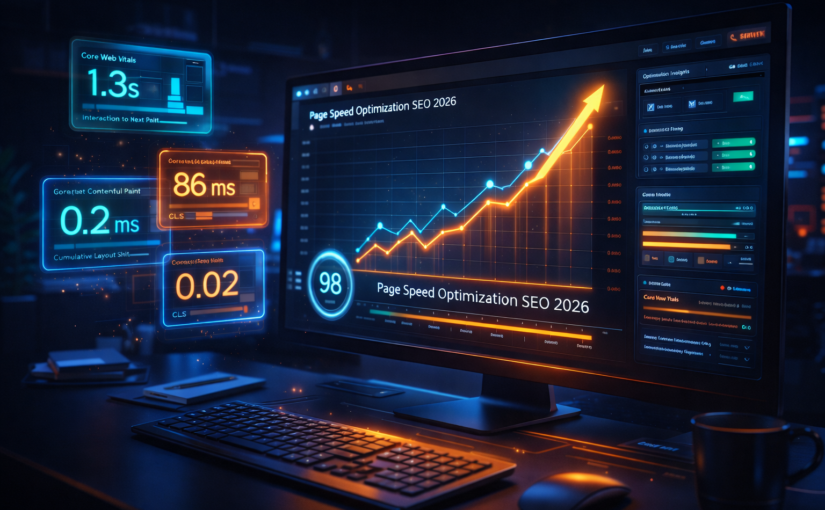
Page Speed Optimization SEO 2026: 12 Proven Techniques to Boost Rankings Fast

🚀 What is Page Speed Optimization SEO & Why It Matters in 2026

In today’s fast-moving digital landscape, page speed optimization SEO is no longer optional—it’s a direct ranking factor that determines whether your website appears on the first page of Google or gets buried under competitors. Users expect websites to load instantly, and even a delay of one or two seconds can significantly impact engagement, conversions, and search rankings.

From an SEO perspective, page speed directly affects how search engines evaluate your site’s performance. Google prioritizes websites that deliver a smooth and fast user experience, especially after the introduction of Core Web Vitals. These metrics measure real-world user interactions, such as loading time, interactivity, and visual stability.

Let’s break down why this matters:

  • User Experience (UX): A faster website keeps visitors engaged and reduces bounce rates.
  • Higher Rankings: Google uses speed signals to rank pages, making optimization essential.
  • Conversion Boost: Faster load times can increase sales, leads, and user actions.
  • Mobile Performance: With mobile-first indexing, speed is critical for mobile users.

Think of your website like a high-performance car. If it runs smoothly and quickly, users enjoy the ride. But if it lags or stalls, they leave instantly—and Google notices that behavior.

Another important factor is how page speed connects with your existing SEO structure. For example, your recently published image optimization SEO 2026 guide plays a crucial role in improving loading speed. Large, unoptimized images are one of the biggest reasons websites slow down.

In 2026, competition is tougher than ever. Websites that fail to optimize their speed are not just losing rankings—they’re losing trust. By focusing on page speed optimization SEO, you ensure your site meets both user expectations and search engine standards.
page speed optimization seo

⚡ How Page Speed Impacts SEO Rankings (Google Signals Explained)

Understanding how page speed optimization SEO influences rankings requires looking at how Google evaluates websites. Over the years, Google has shifted from keyword-focused ranking to user experience-driven algorithms. Today, speed is a core part of that evaluation.

Google uses multiple signals to determine whether your website deserves a higher ranking. Among them, page speed plays a critical role in both desktop and mobile search results. With the rise of mobile-first indexing, websites that fail to load quickly on smartphones often struggle to rank, even if their content is strong.

A strong internal linking strategy SEO helps distribute authority and improves crawl efficiency across your website.

Here are the key ways speed impacts SEO:

  • Crawl Efficiency: Faster websites allow search engine bots to crawl more pages efficiently.
  • Indexing Priority: Slow-loading pages may get delayed or skipped during indexing.
  • User Behavior Signals: High bounce rates and low dwell time send negative signals to Google.
  • Core Web Vitals Integration: Speed is now measured through real user metrics.

One important concept to understand is that Google doesn’t just measure speed in isolation. It evaluates how users interact with your website. If users leave quickly because your pages take too long to load, it signals poor quality—even if your content is valuable.

For example, improving website speed optimization can directly reduce bounce rates and increase session duration. These behavioral improvements strengthen your overall SEO performance.

Another key factor is competitive benchmarking. If two websites offer similar content, Google will likely rank the faster one higher. This makes speed optimization a powerful competitive advantage in saturated niches.

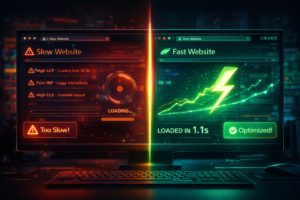
To visualize this, imagine two websites competing for the same keyword. One loads in 2 seconds, while the other takes 6 seconds. Most users will choose the faster site, and Google adapts accordingly by prioritizing it in rankings.

Ultimately, page speed optimization SEO is not just about technical improvements—it’s about aligning your website with Google’s goal of delivering the best possible user experience.
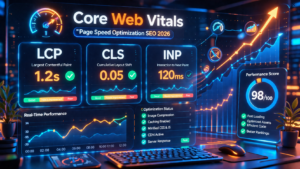
📊 Core Web Vitals Explained (LCP, CLS, INP) — The Real Ranking Signals

To truly master page speed optimization SEO, you must understand Core Web Vitals—the metrics Google uses to measure real user experience. These are not just technical numbers; they reflect how visitors actually interact with your website.

Core Web Vitals focus on three key performance areas:

🔵 1. Largest Contentful Paint (LCP) — Loading Speed

LCP measures how long it takes for the main content of a page to fully load.

  • Ideal time: Under 2.5 seconds
  • A slow LCP often results from large images, slow servers, or unoptimized code

👉 If your page feels slow to users, LCP is usually the reason.

🟠 2. Interaction to Next Paint (INP) — Interactivity

INP evaluates how quickly your website responds to user actions like clicks or taps.

  • Ideal score: Under 200 milliseconds
  • Poor INP is often caused by heavy JavaScript or delayed processing

👉 A laggy website frustrates users and reduces engagement.

🔴 3. Cumulative Layout Shift (CLS) — Visual Stability

CLS measures how stable your page layout is while loading.

  • Ideal score: Less than 0.1
  • High CLS happens when elements shift unexpectedly (e.g., images loading late)

👉 Unexpected movement can lead to poor user experience and accidental clicks.

💡 Why These Metrics Matter for SEO

Google uses these signals to rank pages because they reflect real-world usability. Improving core web vitals optimization helps ensure your site is fast, responsive, and visually stable.

Here’s what happens when you optimize these metrics:

  • Better user engagement and lower bounce rates
  • Improved rankings in competitive niches
  • Higher trust and credibility with visitors

Think of Core Web Vitals as your website’s health report. If your scores are poor, your rankings will suffer—no matter how good your content is.

By focusing on these three metrics, you build a strong foundation for page speed optimization SEO, ensuring your site meets both user expectations and Google’s standards in 2026.
🖼️ Image & Media Optimization for Faster Page Speed (Actionable Fixes)

When it comes to improving page speed optimization SEO, one of the biggest performance killers is unoptimized images and media files. Even the most well-designed websites can become slow if images are too large, poorly formatted, or not properly compressed.

Following proper SEO URL structure best practices 2026 also helps improve crawlability and overall page performance.

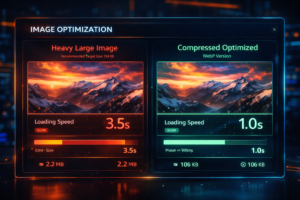
Images often make up more than 50% of a webpage’s total size. That’s why optimizing them is one of the fastest ways to improve speed and overall SEO performance.

⚡ Key Image Optimization Techniques

Here are the most effective ways to improve website speed optimization through media:

  • Use Next-Gen Formats:
    Convert images to WebP or AVIF for smaller file sizes without quality loss.
  • Compress Images Properly:
    Use tools like TinyPNG or ShortPixel to reduce file size before uploading.
  • Resize Before Uploading:
    Avoid uploading large images and scaling them down with CSS.
  • Enable Lazy Loading:
    Load images only when users scroll to them, reducing initial load time.
  • Use Responsive Images:
    Serve different image sizes based on device screen width.

🎥 Video & Media Optimization Tips

Heavy videos can also slow down your website significantly. To avoid this:

  • Embed videos instead of hosting them locally
  • Use lightweight players
  • Enable lazy loading for video content
  • Compress media files where possible

💡 Why This Matters for SEO

Optimizing images directly helps improve page load speed, which is a critical ranking factor. Faster-loading pages lead to better engagement and improved search visibility.

For example, your previous guide on image optimization already plays a major role here. When combined with speed-focused strategies, it creates a strong foundation for website performance optimization.

🚀 Quick Wins Checklist

  • Convert all images to WebP
  • Compress every uploaded file
  • Use lazy loading across pages
  • Avoid unnecessary animations

Think of image optimization as removing unnecessary weight from your website. The lighter it is, the faster it performs.

By implementing these techniques, you significantly strengthen your page speed optimization SEO strategy and move closer to achieving top rankings in 2026.

⚙️ Technical Fixes (Caching, Minification, CDN) — Advanced Speed Optimization

Once you’ve optimized images and content, the next step in page speed optimization SEO is implementing advanced technical improvements. These backend optimizations can dramatically enhance your website’s loading speed and overall performance.

For a complete optimization workflow, follow this On-Page SEO Checklist 2026 to ensure every element is properly optimized.

Many websites struggle not because of content—but because of inefficient code and server handling. Fixing these technical elements can unlock massive speed gains.

⚡ 1. Enable Browser Caching

Caching allows browsers to store static files (like images, CSS, and JavaScript) so they don’t need to reload every time a user visits your site.

Benefits:

  • Faster repeat visits
  • Reduced server load
  • Improved user experience

👉 This is one of the easiest ways to improve website speed optimization instantly.

🧩 2. Minify CSS, JavaScript & HTML

Minification removes unnecessary characters like spaces, comments, and line breaks from your code.

Why it matters:

  • Reduces file size
  • Speeds up loading time
  • Improves rendering performance

👉 Cleaner code directly helps reduce page load time.

🌍 3. Use a Content Delivery Network (CDN)

A CDN distributes your website content across multiple global servers. This ensures users access your site from the nearest server location.

Advantages:

  • Faster global loading speed
  • Reduced latency
  • Better performance for USA traffic

👉 CDNs are essential for serious website performance optimization.

🔧 4. Optimize Server Response Time

Your hosting provider plays a major role in speed.

To improve performance:

  • Choose high-quality hosting
  • Use LiteSpeed or NGINX servers
  • Enable server-side caching

💡 Why These Fixes Matter

Technical optimization ensures your website runs efficiently behind the scenes. Even if your design and content are perfect, slow servers or heavy code can ruin your SEO performance.

Think of this step as upgrading your website’s engine. Without it, even the best design won’t perform at its full potential.

By implementing these advanced techniques, you take your page speed optimization SEO strategy to the next level—ensuring faster load times, better rankings, and improved user satisfaction.

🧪 Best Tools to Measure Page Speed (Google, GTmetrix & More)

To successfully implement page speed optimization SEO, you need accurate data. Without measuring your website’s performance, it’s impossible to identify issues or track improvements. This is where professional speed testing tools come in.

These tools analyze your website and provide actionable insights to help you improve page load speed and overall performance.

🔍 1. Google PageSpeed Insights

This is one of the most trusted tools for measuring performance.

Key Features:

  • Provides Core Web Vitals data
  • Offers mobile and desktop analysis
  • Gives real-world user data (field data)

👉 It also suggests fixes for core web vitals optimization, making it essential for beginners and experts alike.

📊 2. GTmetrix

GTmetrix offers detailed insights into how your website loads.

Highlights:

  • Waterfall analysis (shows loading sequence)
  • Performance grades and scores
  • Visual timeline of page loading

👉 Perfect for deep analysis and identifying technical bottlenecks.

⚡ 3. Pingdom Tools

A simple yet powerful tool for quick speed checks.

Why use it:

  • Easy-to-understand reports
  • Performance score and load time
  • Multiple test locations

🧠 4. WebPageTest

This tool is more advanced and used by developers.

Features:

  • Real browser testing
  • Detailed performance breakdown
  • Advanced diagnostics

💡 How to Use These Tools Effectively

  • Test your website on both mobile and desktop
  • Focus on real-world metrics, not just scores
  • Track improvements after each optimization
  • Prioritize issues affecting user experience

Think of these tools as your SEO performance dashboard. They show exactly what’s slowing your website down and how to fix it.

By consistently using these tools, you can refine your page speed optimization SEO strategy, ensuring your website stays fast, competitive, and optimized for both users and search engines.

🚀 Advanced Tips, Common Mistakes & Final Page Speed Checklist

By now, you’ve built a strong foundation in page speed optimization SEO, but to truly outperform competitors in 2026, you need to go beyond the basics. Small improvements can create a significant edge—especially in competitive USA search results.

⚡ Advanced Optimization Tips

  • Preload Key Resources:
    Prioritize important assets like fonts and hero images for faster rendering
  • Reduce Third-Party Scripts:
    Limit external scripts (ads, trackers) that slow down your site
  • Use Critical CSS:
    Load above-the-fold content first to improve perceived speed
  • Optimize Fonts:
    Use modern formats and avoid loading too many font variations

❌ Common Mistakes to Avoid

Even well-optimized websites often make these errors:

  • Ignoring mobile performance
  • Using oversized images despite compression
  • Overloading pages with plugins
  • Not testing after making changes

👉 These mistakes can cancel out your website speed optimization efforts.

✅ Final Page Speed Optimization Checklist

Use this checklist to ensure your site is fully optimized:

  • ✔ Improve Core Web Vitals scores
  • ✔ Compress and optimize all images
  • ✔ Enable caching and minification
  • ✔ Use a reliable CDN
  • ✔ Reduce server response time
  • ✔ Test regularly with speed tools

💡 Final Thoughts

Speed is no longer just a technical metric—it’s a user expectation. Websites that load instantly build trust, improve engagement, and dominate search rankings.

To understand the complete strategy behind optimization, explore this On-Page SEO Guide 2026 for a full breakdown.

By consistently applying these strategies, you can maintain a strong page speed optimization SEO foundation and stay ahead of algorithm updates.
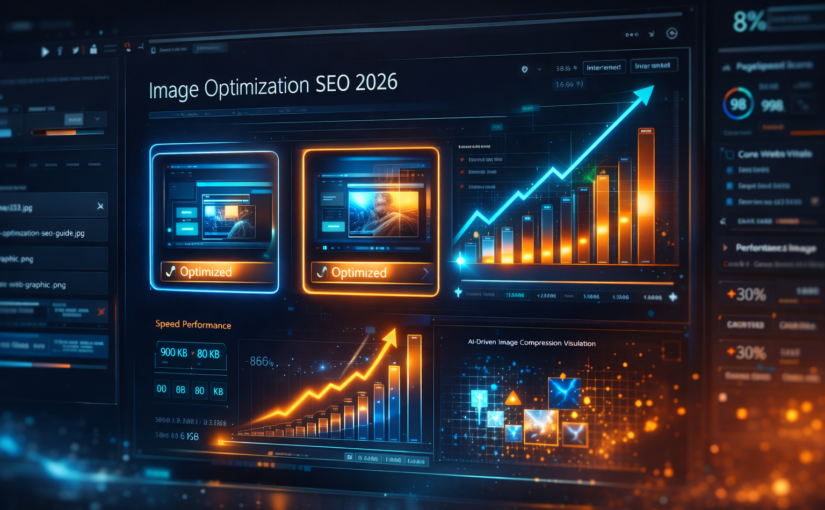
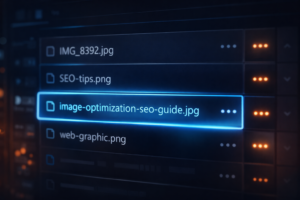
Image Optimization SEO 2026: 12 Powerful Techniques to Boost Rankings Fast

Introduction: Why Image Optimization SEO Matters More Than Ever in 2026

If you’re serious about ranking higher in Google in 2026, ignoring image optimization SEO is no longer an option—it’s a costly mistake.

Search engines have evolved far beyond text. Today, Google evaluates visual content, page speed, and user experience as core ranking factors, especially under Core Web Vitals. This means your images are not just design elements—they are SEO assets that directly impact your visibility.

Let’s break it down.

When a webpage loads slowly due to heavy, unoptimized images, users leave. This increases bounce rate and sends negative signals to Google. On the other hand, properly optimized images improve:

  • ⚡ Page loading speed
  • 📱 Mobile performance
  • 👁️ Visual engagement
  • 🔍 Search engine understanding

This is exactly where image optimization SEO becomes powerful.

In fact, websites that actively optimize images for SEO often see improvements in both:

  • Organic rankings
  • Image search traffic

And here’s something most beginners miss…

Google doesn’t “see” images the way humans do. It relies on signals like:

  • File names
  • Alt text
  • Image size
  • Context around the image

Without proper optimization, your images are invisible to search engines.

image optimization seo

🚀 What You’ll Learn in This Guide

In this complete 2026 guide, you’ll discover:

  • 12 powerful image SEO techniques that actually work
  • How to reduce image size without losing quality
  • The role of modern formats like WebP
  • How to align images with your overall on-page SEO checklist

Whether you’re running a blog, affiliate site, or business website, mastering image optimization SEO will give you a competitive edge—especially in the USA market where performance standards are higher than ever.

Let’s start with the fundamentals in the next section.

Core Fundamentals of Image Optimization SEO (How Google Understands Images)

To truly master image optimization SEO, you need to understand how Google actually processes images behind the scenes.

Unlike humans, Google doesn’t “see” visuals—it interprets data signals. This is why simply uploading a high-quality image is not enough. You must structure it in a way that search engines can understand.

This directly connects with your keyword strategy and overall on-page optimization.”

🔍 How Google Reads Images

Google relies on multiple elements to interpret an image:

  • File name → Describes what the image is about
  • Alt text (alternative text) → Provides context for accessibility and SEO
  • Surrounding content → Helps Google connect the image to your topic
  • Image size & format → Impacts loading speed and performance

When all these elements are optimized together, your chances to optimize images for SEO improve significantly.

⚙️ The 3 Core Pillars of Image SEO

To simplify things, every successful image optimization SEO strategy is built on three pillars:

1. Relevance

Your image must match the content.

For example:
If your article is about internal linking strategy, your images should visually support that topic—not random stock photos.

👉 This helps Google connect your visuals with your keywords.

2. Performance

Heavy images slow down your site.

  • Large file sizes = slow loading
  • Slow loading = poor user experience
  • Poor UX = lower rankings

Using proper image compression SEO techniques ensures your site stays fast while maintaining quality.

3. Context

Google uses surrounding text to understand images.

This includes:

  • Captions
  • Headings
  • Paragraphs near the image

👉 This is why placing images strategically within your content matters.

📈 Why These Fundamentals Matter in 2026

With Google prioritizing Core Web Vitals and mobile-first indexing, image optimization SEO is no longer optional—it’s essential.

Websites that fail to optimize images for SEO often struggle with:

  • Low rankings
  • Poor page speed scores
  • Missed traffic from Google Images

Understanding these fundamentals sets the foundation for everything that follows.

12 Powerful Image Optimization SEO Techniques

Now that you understand the fundamentals, it’s time to implement real strategies that drive results.

These first techniques are the foundation layer of effective image optimization SEO—simple to apply, but highly impactful.

✅ 1. Use SEO-Friendly Image File Names

Before uploading any image, rename it properly.

❌ Bad example:
IMG_8392.jpg

✅ Good example:
image-optimization-seo-guide.jpg

Why this matters:
Google reads file names to understand image context, which aligns with SEO URL structure best practices.
A clear, keyword-rich name helps improve relevance.

👉 This is one of the easiest ways to optimize images for SEO without extra tools.

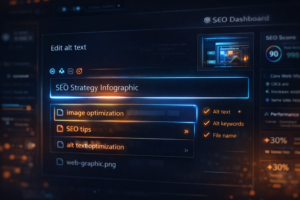
✅ 2. Add Descriptive Alt Text (Must for SEO + Accessibility)

Alt text (alternative text) is critical for both:

  • Search engines
  • Screen readers

Example:
alt="image optimization SEO techniques for faster website loading"

Best practices:

  • Keep it natural (no keyword stuffing)
  • Describe the image clearly
  • Include your keyword only if relevant

Using proper alt text SEO improves both rankings and accessibility compliance.

✅ 3. Compress Images Without Losing Quality

Large images slow your website—this directly hurts rankings.

Use image compression SEO techniques to reduce size while maintaining visual quality.

Recommended approach:

  • Compress before uploading
  • Keep file size under 100KB when possible
  • Maintain clarity for user experience

👉 Faster images = better Core Web Vitals = higher rankings

✅ 4. Choose the Right Image Format

Not all formats are equal.

Here’s what works best in 2026:

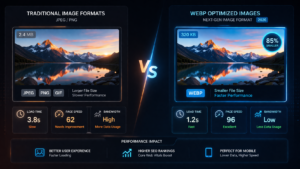
  • JPEG → Best for photos
  • PNG → Best for graphics with transparency
  • WebP → Best overall (smaller size + high quality)

Modern websites are shifting towards webp images seo strategies because they load significantly faster.

🚀 Why These Techniques Matter

These basic optimizations create a strong technical foundation for image optimization SEO.

If ignored, even the best content can struggle to rank.

If implemented correctly, they:

  • Improve page speed
  • Increase visibility
  • Enhance user experience

Advanced Image Optimization SEO Techniques

Once your basics are strong, the next step is implementing advanced strategies that give you a real competitive edge in image optimization SEO.

These techniques directly impact performance, scalability, and user experience—all critical ranking factors in 2026.

⚡ 5. Implement Lazy Loading for Faster Performance

Lazy loading ensures images load only when needed.

Instead of loading all images at once, your website loads them as users scroll.

Benefits:

  • ⚡ Faster initial page load
  • 📉 Reduced server load
  • 📈 Improved Core Web Vitals

Most modern CMS platforms (like WordPress) support this by default, but always verify it’s working.

👉 This is a key method to optimize images for SEO while boosting speed.

📱 6. Use Responsive Images for All Devices

Your images must adapt to different screen sizes.

Responsive images ensure:

  • Smaller images for mobile devices
  • High-quality images for desktops

This improves:

  • Mobile usability
  • Page speed
  • User experience

Google prioritizes mobile-first indexing, so this step is critical for image optimization SEO success.

🧩 7. Add Image Structured Data (Schema Markup)

Structured data helps search engines understand your images better.

By adding schema markup, you can:

  • Improve visibility in rich results
  • Enhance image indexing
  • Increase click-through rates

Examples include:

  • Product images
  • Blog visuals
  • Infographics

👉 This is an advanced but powerful image seo technique often ignored by beginners.

🔗 8. Optimize Image Placement Within Content

Where you place your image matters.

Best practices:

  • Place images near relevant text
  • Align with headings (H2/H3)
  • Avoid random placement

This improves:

  • Content flow
  • User engagement
  • SEO relevance signals

🚀 Why These Advanced Techniques Matter

At this level, image optimization SEO becomes a performance strategy, not just a checklist.

Websites using these techniques often outperform competitors because they:

  • Load faster
  • Deliver better UX
  • Send stronger ranking signals

Expert Image Optimization SEO Techniques + Common Mistakes to Avoid

At this stage, you’re no longer just applying basics—you’re refining your strategy to outperform competitors using advanced image optimization SEO practices.

Let’s go deeper.

🚀 9. Use Image CDN for Faster Global Delivery

If you’re targeting USA traffic, speed across regions matters.

An Image CDN (Content Delivery Network):

  • Stores images on multiple global servers
  • Delivers images from the nearest location to the user

Benefits:

  • ⚡ Ultra-fast loading times
  • 🌎 Better international performance
  • 📈 Improved SEO rankings

👉 This is essential for scaling image optimization SEO on high-traffic websites.

🏷️ 10. Add Captions for Better Engagement

Captions are often ignored—but they are powerful.

Why captions matter:

  • Users read captions more than body text
  • They provide extra context to search engines
  • Increase time-on-page

Example:
“Proper image optimization SEO improves both speed and rankings.”

👉 Captions enhance both UX and relevance signals.

🧠 11. Optimize Image Context with Surrounding Content

Images should never exist in isolation.

To optimize images for SEO, ensure:

  • Keywords appear naturally around the image
  • Headings support the image topic
  • Content explains what the image represents

This strengthens topical relevance and improves indexing.

🧪 12. Test & Audit Your Images Regularly

SEO is not one-time—it’s continuous.

Use audits to check:

  • Image sizes
  • Broken images
  • Missing alt text
  • Slow-loading visuals

Regular audits help maintain strong image optimization SEO performance over time.

❌ Common Mistakes to Avoid

Avoid these critical errors:

  • Uploading large, uncompressed images
  • Missing or keyword-stuffed alt text
  • Using irrelevant images
  • Ignoring mobile optimization
  • Not using modern formats like WebP

👉 These mistakes can silently damage your rankings.

🔥 Final Insight

At the expert level, image optimization SEO is about consistency and precision.

Small improvements here can lead to:

  • Faster websites
  • Higher rankings
  • Better user engagement

Best Tools & Workflow for Image Optimization SEO (Real Implementation Strategy)

Knowing techniques is one thing—but implementing them consistently is what separates average sites from high-ranking ones.

To scale image optimization SEO, you need the right tools and a repeatable workflow.

🛠️ Essential Tools for Image SEO in 2026

Here are some of the most effective tools professionals use:

🔧 Compression Tools

  • TinyPNG / TinyJPG → Easy and effective compression
  • ImageOptim → Great for bulk optimization

👉 These tools help apply image compression SEO without losing quality.

⚡ Format Conversion Tools

  • Squoosh (by Google)
  • CloudConvert

These allow you to convert images into modern formats like WebP using the WebP image format, improving performance instantly.

📊 Performance Testing Tools

  • Google PageSpeed Insights
  • GTmetrix

These tools show how your images impact:

  • Load time
  • Core Web Vitals
  • Overall SEO score

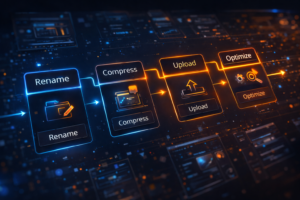
🔄 Step-by-Step Image SEO Workflow

Follow this simple workflow to consistently optimize images for SEO:

  1. Choose the right image (relevant to your content)
  2. Rename the file with a keyword-rich name
  3. Compress the image before upload
  4. Convert to WebP format if possible
  5. Upload and add alt text
  6. Place image strategically in content
  7. Test page speed after publishing

Place images strategically within your content as part of a strong internal linking strategy SEO.

👉 This workflow ensures every image contributes to your image optimization SEO strategy.

📈 Pro Tip: Batch Optimization for Scaling

If you’re publishing regularly:

  • Optimize images in bulk
  • Use plugins (like WordPress optimization tools)
  • Automate compression and lazy loading

This saves time and ensures consistency across your site.

🚀 Why Workflow Matters

Without a system, optimization becomes inconsistent.

With a proper workflow:

  • Your site stays fast
  • SEO performance improves steadily
  • You reduce technical errors

This is how professionals scale image optimization SEO effectively.

Conclusion: Mastering Image Optimization SEO for Long-Term Rankings

By now, it’s clear that image optimization SEO is not just a technical task—it’s a core ranking strategy in 2026.

Websites that consistently optimize their images gain a strong advantage in:

  • ⚡ Page speed performance
  • 📱 Mobile usability
  • 🔍 Search engine visibility

And most importantly—they deliver a better user experience.

🎯 Key Takeaways

Let’s quickly summarize what truly matters:

  • Always optimize images for SEO before uploading
  • Use proper file names and descriptive alt text
  • Apply image compression SEO to maintain speed
  • Use modern formats like WebP
  • Implement lazy loading and responsive images
  • Maintain strong content-image relevance

👉 These are not optional—they are essential.

📈 EEAT Perspective (Why Google Trusts Optimized Sites)

From an EEAT (Experience, Expertise, Authority, Trust) standpoint:

  • Fast-loading pages signal professionalism
  • Optimized visuals improve accessibility
  • Structured content enhances credibility

When combined, these signals help Google trust your website more.

That’s why advanced image optimization SEO directly contributes to long-term ranking stability.

🚀 Final Insight

Most websites still ignore image optimization.

This creates an opportunity.

If you implement everything from this guide, you position your site ahead of competitors—especially in the highly competitive USA market.

On-Page SEO Checklist 2026: 15 Powerful Tips to Rank #1 on Google

🚀 Introduction: Why Most Websites Fail to Rank (And How You Can Win)

If your website is not ranking on Google, the problem is rarely “bad luck.”
In most cases, it comes down to one thing — poor on-page optimization.

The truth is simple: without a proper On-Page SEO Checklist 2026, even great content stays invisible.

Search engines like Google have become smarter. In 2026, they don’t just scan keywords — they analyze:

  • Content quality
  • User experience
  • Structure
  • Relevance

That’s why blindly adding keywords no longer works.

👉 Instead, you need a strategic, structured, and updated approach.

This beginner-friendly guide will walk you through:

  • What on-page SEO really means
  • Why it matters more than ever in 2026
  • Actionable steps you can implement immediately

By the end, you’ll have a complete On-Page SEO Checklist 2026 to start ranking faster.

On-Page SEO Checklist 2026

📘 What is On-Page SEO? (Simple Explanation)

On-page SEO refers to optimizing everything inside your website to improve rankings on Google.

This includes:

  • Content optimization
  • Keyword placement
  • Meta tags
  • Internal linking
  • Page structure

Unlike off-page SEO (like backlinks), this is 100% under your control.

👉 Think of it like this:
Your website is a house, and on-page SEO is how well you organize and decorate it for visitors and Google.

🔍 Core Elements of On-Page SEO

Here are the most important components:

  • Title Tags → First impression on Google
  • Meta Descriptions → Improve click-through rate
  • Headings (H1–H3) → Structure your content
  • Keyword Placement SEO → Helps Google understand context
  • Content Quality → The most important ranking factor

⚡ Why On-Page SEO Matters More in 2026

Google’s algorithm updates now focus heavily on principles outlined in the Google Search Central guidelines to ensure helpful and user-focused content.

  • User intent
  • Content depth
  • Helpful experience

This means:

Low-quality or poorly optimized pages simply won’t rank.

Using a strong On-Page SEO Checklist 2026 helps you:

  • ✅ Rank higher on Google
  • ✅ Increase organic traffic
  • ✅ Improve user engagement
  • ✅ Reduce bounce rate

📊 What Changed in 2026?

Here are the biggest shifts:

  1. Search Intent > Keywords
  2. Helpful Content System dominates rankings
  3. User experience signals are critical
  4. Content structure matters more than ever

👉 So if you’re still using outdated on-page SEO tips, you’re already behind.

🧠 Tip #1: Start With Search Intent (The #1 Ranking Factor)

Before writing anything, ask:

What does the user actually want?

There are 3 main types of intent:

  • Informational
  • Commercial
  • Transactional

If your content doesn’t match intent, it won’t rank — no matter how optimized it is.

✔️ How to Optimize for Search Intent

  • Analyze top-ranking pages
  • Match their content style
  • Provide better, clearer answers
  • Avoid unnecessary fluff

👉 This is the foundation of every successful SEO checklist for beginners.

✍️ Tip #2: Use the Focus Keyword Strategically

Your focus keyword — On-Page SEO Checklist 2026 — must be used smartly, not excessively.

✔️ Where to Place It

  • Title (at the beginning)
  • First 100 words
  • At least one H2 heading
  • Naturally throughout the content

⚠️ Avoid This Mistake

❌ Keyword stuffing
❌ Forced repetition

Instead:

  • Keep it natural
  • Focus on readability

👉 Proper keyword placement SEO is essential for better rankings, and using a meta tags generator tool can further optimize your page.

🧩 Tip #3: Optimize Your Title Tag for Clicks

Your title is what users see first on Google.

A powerful title should:

  • Include your keyword
  • Use numbers (like “15 Tips”)
  • Add emotional triggers (Powerful, Proven, Ultimate)

✔️ Example

Good Title:
On-Page SEO Checklist 2026: 15 Powerful Tips to Rank #1

👉 This is one of the most effective on-page SEO tips to improve CTR instantly.

📝 Tip #4: Write a Compelling Meta Description

Meta descriptions don’t directly rank — but they influence clicks.

✔️ Best Practices

  • Keep under 160 characters
  • Include the focus keyword
  • Add a benefit-driven hook

✨ Example

“Discover the ultimate On-Page SEO Checklist 2026 to boost rankings, optimize content, and drive more organic traffic fast.”

👉 This small tweak can significantly improve your improve Google ranking efforts.

📑 Tip #5: Use Proper Heading Structure (H1–H3)

Headings are not just for design — they help Google understand your content.

✔️ Correct Structure

  • H1 → Main title
  • H2 → Main sections
  • H3 → Subpoints

💡 Pro Tip

Include variations of your keyword naturally in headings.

This improves:

  • Readability
  • SEO clarity
  • User experience

👉 Strong structure is a core part of on-page optimization techniques.

🔗 Tip #6: Optimize Your URL Structure (Keep It Clean & SEO-Friendly)

A clean URL structure combined with a properly configured XML sitemap generator tool helps search engines crawl and index your pages more efficiently.

Your URL is a small detail — but it plays a big role in rankings and user trust.

A clean URL helps both:

  • Users understand your page
  • Google crawl your content better

✔️ Best Practices for SEO URLs

  • Keep it short and simple
  • Include your focus keyword: On-Page SEO Checklist 2026
  • Use hyphens (-) instead of underscores
  • Avoid unnecessary numbers or symbols

✨ Example

✅ Good:
/on-page-seo-checklist-2026

❌ Bad:
/seo?id=12345&page=checklist2026

👉 Clean URLs are a fundamental part of on-page optimization techniques that many beginners ignore.

🔄 Tip #7: Build Smart Internal Linking (Boost Authority Instantly)

Internal linking is one of the most underrated SEO strategies.

It helps:

  • Distribute page authority
  • Improve crawlability
  • Keep users engaged longer

✔️ How to Do It Properly

  • Link to relevant pages (like your Keyword Density in SEO article)
  • Use descriptive anchor text
  • Avoid over-linking

💡 Pro Tip

Always link:

  • From high-authority pages → new pages
  • Between related cluster posts

👉 This strengthens your SEO silo structure and improves rankings.

🖼️ Tip #8: Optimize Images for SEO (Faster + Smarter Pages)

Images are essential for engagement — but if not optimized, they can slow your site.

✔️ Image SEO Checklist

  • Use descriptive file names (on-page-seo-checklist.jpg)
  • Add alt text (important for accessibility + SEO)
  • Compress images for faster loading
  • Use modern formats (WebP)

✨ Example Alt Text

“On-Page SEO Checklist 2026 infographic showing ranking tips”

👉 Proper image optimization is a key part of content optimization SEO.

⚡ Tip #9: Improve Page Speed (Critical Ranking Factor)

Improving speed is easier when you use the right technical SEO tools to analyze and optimize your website structure.

In 2026, speed = rankings.

If your site is slow:

  • Users leave
  • Bounce rate increases
  • Rankings drop

✔️ Ways to Improve Speed

To further improve performance, you can analyze your website speed using Google PageSpeed Insights for detailed recommendations.

  • Use fast hosting
  • Enable caching
  • Optimize images
  • Minimize CSS & JavaScript

📊 Ideal Speed Targets

  • Load time: under 3 seconds
  • Mobile performance: high priority

👉 Page speed directly impacts your ability to improve Google ranking.

📱 Tip #10: Make Your Site Mobile-Friendly

Over 70% of users browse on mobile — and Google uses mobile-first indexing.

✔️ Mobile Optimization Tips

  • Use responsive design
  • Ensure text is readable
  • Avoid intrusive pop-ups
  • Optimize buttons for touch

💡 Why It Matters

A poor mobile experience can:

  • Kill your rankings
  • Reduce conversions
  • Hurt user trust

👉 Mobile optimization is now a core part of SEO best practices 2026.

🧠 Quick Recap

So far in this On-Page SEO Checklist 2026, you’ve learned:

  • ✔️ How to create SEO-friendly URLs
  • ✔️ The power of internal linking
  • ✔️ Image optimization techniques
  • ✔️ Why speed matters
  • ✔️ Mobile-first optimization

These steps alone can give you a strong ranking advantage over competitors still using outdated strategies.

✍️ Tip #11: Create High-Quality, Helpful Content (Google’s #1 Priority)

No matter how optimized your page is, if your content is weak — you won’t rank.

In 2026, Google prioritizes:

  • Helpful content
  • Real value
  • User satisfaction

✔️ What Makes Content High-Quality?

  • Solves a real problem
  • Easy to read and understand
  • Well-structured with headings
  • Includes examples and clarity

💡 Pro Tip

Write for humans first, then optimize for SEO.

👉 This is the backbone of any successful On-Page SEO Checklist 2026 strategy.

📍 Tip #12: Master Keyword Placement (Without Stuffing)

Keyword placement is still important — but overdoing it can hurt rankings.

✔️ Smart Keyword Placement Areas

  • First 100 words
  • Headings (H2, H3)
  • Image alt text
  • Naturally in paragraphs

⚠️ Avoid These Mistakes

❌ Repeating keywords unnaturally
❌ Forcing keywords into every sentence

✨ Best Practice

Use variations and synonyms to maintain flow.

👉 Proper keyword placement SEO improves both rankings and readability.

🏷️ Tip #13: Optimize Meta Tags (Title + Description + More)

Meta tags help search engines understand your content and improve click-through rates.

✔️ Key Meta Tags to Optimize

  • Title tag
  • Meta description
  • Header tags
  • Image alt attributes

💡 Advanced Tip

Make your title and description:

  • Emotion-driven
  • Benefit-focused
  • Clear and concise

👉 This is one of the most overlooked on-page SEO tips that can dramatically improve visibility.

🧠 Quick Recap

Inside this On-Page SEO Checklist 2026, you’ve now learned:

  • ✔️ How to create helpful, high-quality content
  • ✔️ Smart keyword placement strategies
  • ✔️ Meta tag optimization

These are core ranking factors that separate top-ranking pages from average ones.

👀 Tip #14: Improve User Engagement Signals (Hidden Ranking Factor)

Google doesn’t just look at your content — it tracks how users interact with it.

These are called engagement signals, and they include:

  • Time on page
  • Click-through rate (CTR)
  • Bounce rate

✔️ How to Improve Engagement

  • Write compelling introductions
  • Use short paragraphs
  • Add bullet points and visuals
  • Keep content easy to scan

💡 Pro Tip

Hook your reader within the first 5 seconds.

👉 Strong engagement signals tell Google your content is valuable, boosting your On-Page SEO Checklist 2026 performance.

📉 Tip #15: Reduce Bounce Rate (Keep Visitors Longer)

If users leave your page quickly, Google assumes your content isn’t helpful.

✔️ Ways to Reduce Bounce Rate

  • Match search intent perfectly
  • Improve page speed
  • Use internal linking
  • Add clear structure

✨ Example Strategy

At the end of sections, guide users like:

  • “Read next: Keyword Density in SEO”
  • “Explore more SEO tips here”

👉 Lower bounce rate = better chances to improve Google ranking.

📖 Bonus Section: Improve Readability (Make Content Effortless to Read)

Even great content fails if it’s hard to read.

✔️ Readability Best Practices

  • Use short sentences
  • Keep paragraphs under 3 lines
  • Use bullet points and numbering
  • Highlight important words using italics

💡 Formatting Tips

  • Add spacing between sections
  • Use clear headings (H2, H3)
  • Avoid large blocks of text

👉 These are essential SEO content writing tips for modern rankings.

🎯 Bonus Section: Content Formatting Secrets (Pro-Level Optimization)

Well-formatted content performs better — both for users and search engines.

✔️ Advanced Formatting Techniques

  • Use numbered lists for steps
  • Add bold or italic emphasis
  • Break complex ideas into sections
  • Use consistent heading hierarchy

📊 Why It Matters

Better formatting leads to:

  • Higher engagement
  • Longer session duration
  • Better rankings

👉 This aligns with modern SEO best practices 2026.

🧠 Quick Recap

In this section of the On-Page SEO Checklist 2026, you learned:

  • ✔️ How to improve user engagement signals
  • ✔️ Ways to reduce bounce rate
  • ✔️ Readability optimization
  • ✔️ Advanced content formatting

These factors are often ignored — but they can significantly boost your rankings.

🧠 Advanced Strategy #1: Optimize for EEAT (Experience, Expertise, Authority, Trust)

In 2026, Google heavily evaluates EEAT before ranking content.

That means your page must show:

  • Real experience
  • Expert knowledge
  • Credibility
  • Trustworthiness

✔️ How to Improve EEAT

  • Add author information
  • Include real examples or insights
  • Link to credible external sources
  • Keep your content accurate and updated

💡 Pro Tip

Even beginner content can rank if it is:

clear, helpful, and trustworthy

👉 Strengthening EEAT enhances your overall On-Page SEO Checklist 2026 effectiveness.

🔄 Advanced Strategy #2: Keep Content Fresh (Google Loves Updated Pages)

Content freshness is a major ranking factor.

Outdated content = lost rankings.

✔️ How to Keep Content Fresh

  • Update statistics regularly
  • Add new tips or sections
  • Improve outdated examples
  • Refresh your meta description

📊 Best Practice

Update your content every 3–6 months.

👉 Fresh content signals help you consistently improve Google ranking.

🔗 Advanced Strategy #3: Use Strategic Outbound Links (Boost Trust Instantly)

Linking to authority websites improves your credibility.

✔️ Best Practices

  • Link to trusted sources (like Google guidelines)
  • Use relevant context
  • Avoid spammy or low-quality sites

💡 Why It Works

It shows Google:

  • Your content is well-researched
  • You provide value beyond your page

👉 This is a powerful yet simple on-page optimization technique.

📊 Advanced Strategy #4: Optimize for Featured Snippets

Featured snippets can skyrocket your traffic.

✔️ How to Win Snippets

  • Answer questions clearly
  • Use bullet points
  • Add numbered steps
  • Keep answers concise

✨ Example Format

Question: What is on-page SEO?
Answer: A short, direct explanation in 2–3 lines

👉 This strategy fits perfectly into modern SEO best practices 2026.

🧩 Advanced Strategy #5: Use Content Depth (Cover Topics Completely)

Thin content no longer ranks.

Google prefers:

  • In-depth guides
  • Comprehensive coverage
  • Structured information

✔️ How to Add Depth

  • Cover all subtopics
  • Answer related questions
  • Use examples and explanations

💡 Pro Tip

Think of your page as a complete resource, not just an article.

👉 This is essential for a high-performing SEO checklist for beginners.

📌 Final Optimization Checklist (Quick Action Guide)

Before publishing, make sure your page includes:

  • ✔️ Focus keyword placed naturally
  • ✔️ Proper heading structure (H1–H3)
  • ✔️ Internal linking
  • ✔️ Optimized images
  • ✔️ Fast loading speed
  • ✔️ Mobile-friendly design
  • ✔️ High-quality content
  • ✔️ Clear formatting

👉 Following this ensures your On-Page SEO Checklist 2026 is fully optimized.

🧠 Quick Recap

In this section, you learned:

  • ✔️ EEAT optimization strategies
  • ✔️ Content freshness importance
  • ✔️ Outbound linking benefits
  • ✔️ Featured snippet optimization
  • ✔️ Content depth techniques

These advanced techniques help you move from:

Basic SEO → High-ranking authority content

🏁 Conclusion: Turn Strategy Into Rankings

By now, you’ve built a complete, actionable On-Page SEO Checklist 2026 that goes far beyond basic tips.

From:

  • Search intent optimization
  • Keyword placement
  • Technical structure
  • User experience signals
  • Advanced EEAT strategies

👉 You now have a pro-level system to rank higher on Google.

🎯 Final Advice

SEO is not about shortcuts.

It’s about:

  • Consistency
  • Optimization
  • Continuous improvement

💡 Action Plan

Start today:

  1. Audit your existing content
  2. Apply this checklist step-by-step
  3. Track improvements
  4. Update regularly

👉 When implemented correctly, this On-Page SEO Checklist 2026 can transform your website into a traffic-generating machine.