
In today’s competitive search landscape, mastering an effective internal linking strategy SEO approach is one of the most underrated yet powerful ways to improve rankings. While many website owners focus only on keywords and content, internal linking quietly strengthens your site’s structure, authority, and user experience.
Understanding how Google Search works helps you build a more effective internal linking strategy
Simply put, internal links connect one page of your website to another. But when done strategically, they help search engines understand your content hierarchy and distribute ranking power across your site. This makes internal linking a critical part of modern on-page SEO.

📌 Why Internal Linking Matters in 2026
Search engines like Google rely on links to discover, crawl, and rank pages. A well-planned internal linking strategy SEO ensures that your most important pages receive the attention they deserve.
Here’s what strong internal linking can do:
- Improve crawlability and indexation
- Distribute link equity (SEO value) across pages
- Increase time on site and user engagement
- Help rank deeper pages faster
For growing websites targeting USA traffic, this becomes even more important. Without proper linking, your content may remain hidden—even if it’s high quality.
🎯 Internal Linking vs External Linking
It’s important to distinguish between internal and external links:
- Internal links → connect pages within your own website
- External links → point to other websites
While both are important, internal links give you full control over how authority flows through your site.
🧠 EEAT Perspective
From an EEAT standpoint (Experience, Expertise, Authority, Trust), internal linking helps demonstrate topical depth. When your content is connected logically, it signals to Google that your website is structured, reliable, and authoritative.
That’s why every successful SEO strategy today includes a well-planned internal linking strategy SEO framework.
To fully understand an effective internal linking strategy SEO, you need to know how search engines actually use links to evaluate your website. Internal links are not just navigation tools—they act as signals that guide both users and search engine crawlers through your content.
When Google’s bots visit your website, they follow internal links to discover new pages. If a page has no internal links pointing to it, it becomes an orphan page, making it difficult to index and rank. This is why a structured internal linking system is essential for strong on-page SEO performance, as outlined in a comprehensive on-page SEO checklist.
🔍 How Link Equity Flows
Every page on your website has a certain level of authority. Internal links help distribute this authority, often referred to as link equity, across your site.
Here’s how it works:
- Pages with higher authority pass value to linked pages
- Strategic linking boosts lower-ranking pages
- Important pages gain more visibility in search results
A smart internal linking strategy SEO ensures that your most valuable pages receive the strongest signals.

📊 Anchor Text & Context
Anchor text—the clickable text of a link—plays a crucial role in helping search engines understand what the linked page is about, making proper anchor text optimization essential.
Best practices:
- Use descriptive and relevant anchor text
- Avoid generic phrases like “click here”
- Keep it natural and user-friendly
Proper anchor usage strengthens your content relevance and improves rankings.
🧠 User Experience Connection
Internal linking is not just for search engines—it directly impacts user behavior.
- Helps users find related content
- Increases time spent on your website
- Reduces bounce rates
When users navigate smoothly, it sends positive engagement signals to Google.
🎯 Key Insight
A well-executed internal linking strategy SEO creates a clear path for both users and search engines, ensuring your content is discovered, understood, and ranked effectively.
To build a strong internal linking strategy SEO, it’s important to understand that not all internal links are the same. Different types of links serve different purposes, and using them correctly can significantly improve your site structure and rankings.
Let’s break down the most effective types of internal links you should use.
Following Google’s SEO starter guidelines ensures your internal links align with best practices.
🔹 1. Navigational Links
These are found in menus, headers, and footers. They help users explore your website easily and allow search engines to understand your main pages.
Examples:
- Homepage links
- Category pages
- Important service or tool pages
These links form the backbone of your website structure and support on-page SEO.
🔹 2. Contextual Links (Most Powerful)
Contextual links are placed within your content and are the most important part of any internal linking strategy SEO.
They:
- Provide relevance based on content
- Pass strong link equity
- Improve user engagement
For example, linking from a blog about keywords to another article about optimization creates a logical content flow.

🔹 3. Sidebar Links
Sidebar links highlight important or popular content across multiple pages.
They are useful for:
- Promoting key articles
- Improving page visibility
- Enhancing internal navigation
🔹 4. Footer Links
Footer links are placed at the bottom of your website and typically include important pages like:
- Contact
- Privacy Policy
- Main categories
While they pass less SEO value than contextual links, they still contribute to overall structure.
🔹 5. Breadcrumb Links
Breadcrumbs show users their location within your website hierarchy.
Benefits:
- Improve navigation
- Help search engines understand structure
- Enhance user experience
🎯 Strategic Insight
A complete internal linking strategy SEO uses a mix of these link types to create a well-connected, easy-to-navigate website that both users and search engines can trust.
Now that you understand the types of links, it’s time to apply a results-driven internal linking strategy SEO that can directly improve your rankings. These proven techniques are designed to strengthen your site structure and maximize SEO performance.
🚀 1. Link to High-Priority Pages First
Always direct internal links toward your most important pages, such as pillar content or conversion-focused pages.
🚀 2. Use Keyword-Rich Anchor Text Naturally
Incorporate relevant keywords without over-optimization to support better context and rankings.
🚀 3. Create Topic Clusters (Silo Structure)
Group related content together. This strengthens topical authority and improves on-page SEO signals.
🚀 4. Link from High Authority Pages
Pages that already rank well should pass value to newer or weaker pages.
🚀 5. Keep Links Contextually Relevant
Only link where it makes sense. Relevance is more important than quantity.
🚀 6. Avoid Over-Linking
Too many links can dilute value and confuse users. Keep it clean and focused.

🚀 7. Update Old Content with New Links
Go back to existing posts and add links to newer articles to boost visibility.
🚀 8. Fix Orphan Pages
Ensure every page has at least one internal link pointing to it.
🚀 9. Use Descriptive Anchor Text
Avoid generic phrases—make your links meaningful and informative.
🚀 10. Maintain Logical Link Flow
Guide users naturally from one topic to another, improving navigation and engagement.
🎯 Pro Insight
A strong internal linking strategy SEO is not about adding more links—it’s about adding the right links in the right places. When done correctly, it creates a seamless experience that benefits both users and search engines.
Even with a solid plan, mistakes in your internal linking strategy SEO can limit your website’s performance. Many site owners unknowingly weaken their rankings by using poor linking practices that confuse search engines and frustrate users.
Avoiding these common errors is essential to maintain a strong and effective on-page SEO structure.
❌ 1. Using Too Many Internal Links
Adding excessive links on a single page dilutes link equity and overwhelms users. Instead of helping, it reduces clarity and impact.
❌ 2. Ignoring Anchor Text Optimization
Generic anchors like “click here” provide no context. This weakens your SEO signals and makes it harder for search engines to understand your content relationships.
❌ 3. Linking to Irrelevant Pages
Internal links should always match the topic. Irrelevant linking disrupts user flow and reduces trust in your content.
❌ 4. Creating Orphan Pages
Pages without internal links are difficult for search engines to find. This limits their chances of ranking, no matter how good the content is.
❌ 5. Over-Optimizing Anchor Text
Maintaining the right keyword density in SEO is essential to keep your anchor text natural and avoid over-optimization.
❌ 6. Not Updating Old Content
Many websites fail to revisit older posts. By not adding links to newer content, you miss opportunities to improve visibility and authority.
❌ 7. Broken Internal Links
Links that lead to 404 pages harm both user experience and SEO performance. Regular audits are necessary to fix these issues.
⚠️ Critical Insight
A successful internal linking strategy SEO is built on clarity, relevance, and consistency. Small mistakes can quietly weaken your entire structure.

✅ Quick Fix Checklist
- Keep links relevant and intentional
- Use clear and descriptive anchor text
- Ensure every page is properly connected
- Regularly audit and update your links
Avoiding these mistakes ensures your internal linking system supports growth instead of holding it back.
To stay competitive in 2026, your internal linking strategy SEO must go beyond basic linking. Advanced strategies focus on data, structure, and user behavior to maximize results in highly competitive markets like the USA.
🔥 1. Build Topic Clusters with Depth
Instead of random linking, organize your content into clusters. Each cluster should revolve around a central pillar page supported by related articles.
Benefits:
- Strengthens topical authority
- Improves keyword relevance
- Enhances overall on-page SEO
🔥 2. Use Hierarchical Linking Structure
Structure your links in a clear hierarchy:
- Pillar page → links to cluster pages
- Cluster pages → link back to pillar
- Cluster pages → interlink with each other
This creates a strong SEO network that search engines can easily understand.
🔥 3. Prioritize Crawl Depth Optimization
Important pages should not be buried deep within your website. Ideally, users and search engines should reach key pages within 2–3 clicks.
🔥 4. Leverage Data for Link Optimization
Use analytics tools to identify:
- High-performing pages
- Pages with low visibility
- Opportunities to pass link equity
This data-driven approach improves your linking efficiency.
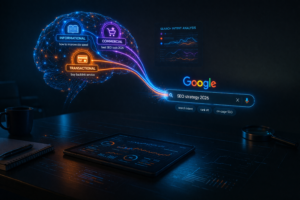
🔥 5. Contextual Linking Based on User Intent
Match your internal links with user intent:
- Informational → link to guides
- Commercial → link to comparison pages
- Transactional → link to tools or services
🔥 6. Use Internal Links to Boost New Content
Whenever you publish a new article, immediately link to it from existing high-authority pages. This accelerates indexing and ranking.
🔥 7. Maintain a Clean and Logical Structure
Avoid clutter. Every link should have a purpose and guide users naturally through your content.
🎯 Strategic Insight
An advanced internal linking strategy SEO is not static—it evolves with your content, data, and user behavior. The more structured and intentional your linking system is, the stronger your rankings will become.
By now, you’ve learned how a structured internal linking strategy SEO can significantly improve your rankings, user experience, and website authority. While many SEO techniques require external effort, internal linking is fully within your control—making it one of the most powerful tools for long-term growth.
✅ Step-by-Step Action Plan
To implement everything effectively, follow this proven framework:
- Audit Your Current Internal Links
Identify weak, broken, or missing links across your website. - Strengthen Key Pages
Link more frequently to your most important pages to boost visibility. - Use Clear and Relevant Anchor Text
Ensure each link provides context and value to users. - Build a Logical Content Structure
Organize your pages into clusters and maintain a clear hierarchy. - Update Old Content Regularly
Add links to newer posts to keep your content interconnected. - Fix Orphan and Broken Pages
Ensure every page is accessible and properly linked. - Monitor Performance and Adjust
Track engagement and refine your linking strategy over time.